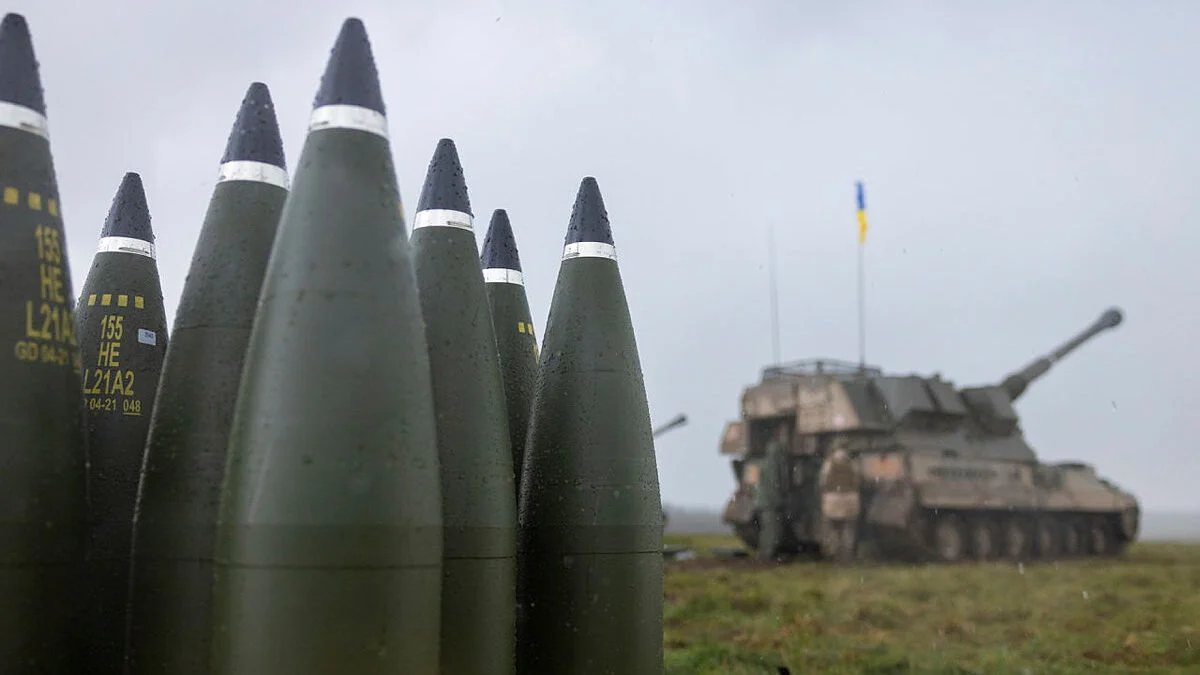
Estonia’s Minister of Defense, Hanno Pevkur, tendered his resignation on September 2nd amidst escalating controversy surrounding a €70 million (approximately $81 million) procurement deal for artillery munitions intended for Ukraine. The critical ordnance, financed by European Union funds, was never delivered, leading to a significant political and financial imbroglio.
The Estonian Centre for Defense Investments (RKIK/ECDI) had entered into four contracts with Italian firm Datasel S.R.L., making upfront payments totaling approximately €70 million for the acquisition of artillery ammunition earmarked for transfer to Ukraine. However, the procured munitions failed to reach Ukraine. Investigations revealed that Datasel S.R.L. possessed no prior history of ammunition sales and had recently undergone an acquisition by an Indian defense company, raising serious questions about the due diligence conducted during the contracting process. Estonia is now actively pursuing recovery of these disbursed funds through its national courts and potentially via the European Arbitration Court in Strasbourg.
Discrepancies exist regarding the precise sum directly linked to Datasel’s advance payments. While RKIK attributes the total scandal amount to €70 million, former Minister Pevkur specified that roughly €60 million in advance payments were directly associated with Datasel. Conversely, Datasel S.R.L. asserts it received €59 million and invoiced goods valued at €58 million.
A comprehensive annual report released by the Estonian State Audit Office (Riigikogu) on August 28th highlighted severe systemic deficiencies within the operational frameworks of agencies under the Ministry of Defense. The report underscored persistent shortcomings in contract management, monitoring, and execution, alongside failures in the verification of conformity and arrival checks for received goods. Furthermore, the audit exposed that RKIK had assumed significant fiscal liabilities and financial exposure for the Estonian state budget through equipment brokerage contracts, despite ministerial budget documents claiming otherwise.
In response to the audit’s findings and related matters from 2025 and 2026 reports, the Estonian Prosecutor General’s Office has initiated a criminal investigation. Concurrently, Christian Wigand, a spokesperson for the European Commission, confirmed that Brussels is in communication with Estonian authorities to ascertain whether Estonia will be required to reimburse the €70 million it received from the European Peace Facility.
Pevkur’s departure marks the second such resignation of a defense minister in the Baltic region in recent months, following Latvia’s Andris Sprūds in May. This development underscores critical vulnerabilities in procurement oversight at a time when Baltic nations are rapidly escalating defense expenditures to counter the persistent threat from Russia. Estonia has also recently reported multiple drone incursions into its airspace, further emphasizing the heightened security environment and the imperative for robust and transparent defense acquisition processes.

admin