The United States Navy is undertaking an unprecedented evaluation of foreign warship designs, including Turkey’s advanced ISTIF-class frigate, as part of a strategic push by the White House to rapidly expand the naval fleet. This move, confirmed by multiple industry sources to USNI News, signals a significant departure from over a century of reliance on exclusively domestic shipbuilding for U.S. Navy combatants and could see the initial units of a new frigate class constructed in foreign shipyards.
The high-stakes international competition is driven by a White House memorandum issued in August. This directive invoked a “national security interest” exception to circumvent a standing U.S. law that prohibits the procurement of foreign-built warships for the U.S. Navy, thereby paving the way for international consideration. Following this, Acting Secretary of the Navy Hung Cao mandated a comprehensive sourcing study to assess foreign-origin warships, alongside other vessel types like Ro-Ro cargo ships and consolidated cargo replenishment tankers, with findings anticipated by November 12, 2026.
Among the designs reportedly under review are export variants of Japan’s Mitsubishi Heavy Industries FFM Mogami-class frigates and the Chungnam-class frigates built by various South Korean shipyards. The Turkish ISTIF-class, simultaneously constructed by multiple Turkish shipyards, notably entered the competition following a high-level discussion between President Erdoğan and President Donald Trump during the NATO Summit in July.
A potential procurement model under consideration is the “Finland model,” where the first two vessels are built abroad to accelerate delivery and facilitate technology transfer, with subsequent production shifting to U.S. facilities. This approach mirrors the U.S. Coast Guard’s Arctic Security Cutter program, where initial hulls are constructed in Finnish shipyards based on a Canadian design before transitioning to U.S. production.
Captain Ron Flanders, spokesperson for the Assistant Secretary of the Navy for Research, Development, and Acquisition (ASN RDA), affirmed the White House’s intent: “The President has directed the Navy to aggressively increase domestic production capacity, including by leveraging the proven shipbuilding expertise and industrial acumen of our allies. We are actively developing options to realize the President’s intent, aiming to deliver ships faster while ensuring long-term investment, technology transfer, and workforce expansion in U.S. shipyards.”
Despite the administration’s resolve, the initiative faces substantial congressional opposition. The draft of the Senate Armed Services Committee’s Fiscal Year 2027 Defense Policy Bill seeks to remove the “national security interest” exception, aiming to curtail the White House’s ability to pursue foreign warship construction. Similarly, the House Armed Services Committee’s draft includes language that would prohibit approved funding for contracts related to acquiring U.S. warships built in foreign shipyards. The final legislative outcome is expected to clarify this autumn.
Frigates are deemed crucial for addressing an existing capability gap within the U.S. Navy’s surface fleet. Senior service leaders note that high-end Arleigh Burke-class guided-missile destroyers are frequently tasked with routine missions better suited for frigates, diverting them from their primary role in high-intensity naval combat. Rear Admiral Brian Metcalf, Assistant Program Manager for Combatant Ships Acquisition, articulated this necessity in July: “The Navy cannot operate with a single-size ship. The frigate will fill that gap. It can be used in less risky waters, for high-value escort missions. There are many roles a frigate can fill, enabling destroyers to execute their high-end mission set.”
While the U.S. Navy is currently pursuing its domestic Constellation-class (FFG-62) guided-missile frigate program, designed for anti-submarine warfare (ASW) and general purpose operations by Fincantieri Marinette Marine, the exploration of international designs signals an intent to either rapidly augment the fleet or identify alternatives for future tranches. Recent years have seen U.S. Navy officials, including former Secretary of the Navy John Phelan and retired Vice Admiral Richard Breckenridge, undertake multiple visits to South Korean shipyards, alongside a U.S. congressional delegation, underscoring the seriousness of this global search.
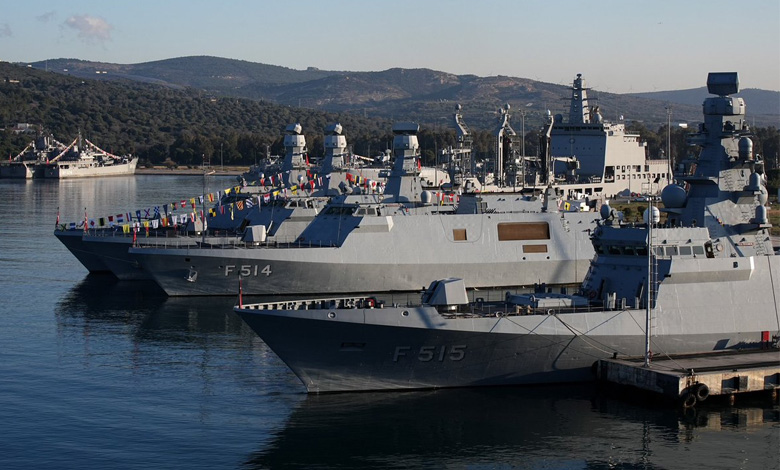
The inclusion of Turkey’s ISTIF-class frigate in this evaluation marks a significant milestone for the Turkish defense industry, positioning its shipbuilding capabilities directly within the U.S. Navy’s procurement calculus rather than solely for export markets. The ISTIF-class, developed under Turkey’s MILGEM (National Ship) program, boasts a modular design and integrated combat systems. These frigates measure approximately 113 meters in length with a displacement exceeding 3,000 tons. Powered by a Combined Diesel And Gas (CODAG) propulsion system, they achieve a maximum speed of 29 knots and a formidable cruising range of 5,700 nautical miles (approximately 10,600 km).
The class incorporates advanced indigenous Turkish defense technologies, including the ASELSAN CENK-S Active Electronically Scanned Array (AESA) radar system, the HAVELSAN ADVENT Combat Management System, ROKETSAN ATMACA anti-ship missiles, and a MIDLAS Vertical Launch System (VLS). Further armaments include the MKE 76mm naval gun and the ASELSAN GÖKDENİZ Close-in Weapon System (CIWS). The lead ship, TCG ISTANBUL (F-515), is already operational with the Turkish Navy. Future vessels in the class, including the seven currently under construction, will feature “Assault Type MIDLAS (VLS)” capabilities, enabling the launch of longer-range air defense missiles as well as GEZGİN and ATMACA anti-ship/cruise missiles. Notably, two of these upcoming frigates are slated for delivery to Indonesia, with new vessels to be built for the Turkish Navy as replacements. Additionally, TCG Izmir (F-516) and TCG Kocali (F-517) are scheduled for temporary delivery to the Turkish Navy by the end of this year. This robust production demonstrates Turkey’s expanding naval shipbuilding prowess, which also includes the recent rapid launch of three MILGEM Ada-class corvettes for Malaysia.
The unfolding process, particularly how congressional legislative barriers will ultimately shape the administration’s foreign warship acquisition strategy, remains a critical watchpoint for the coming months.


admin