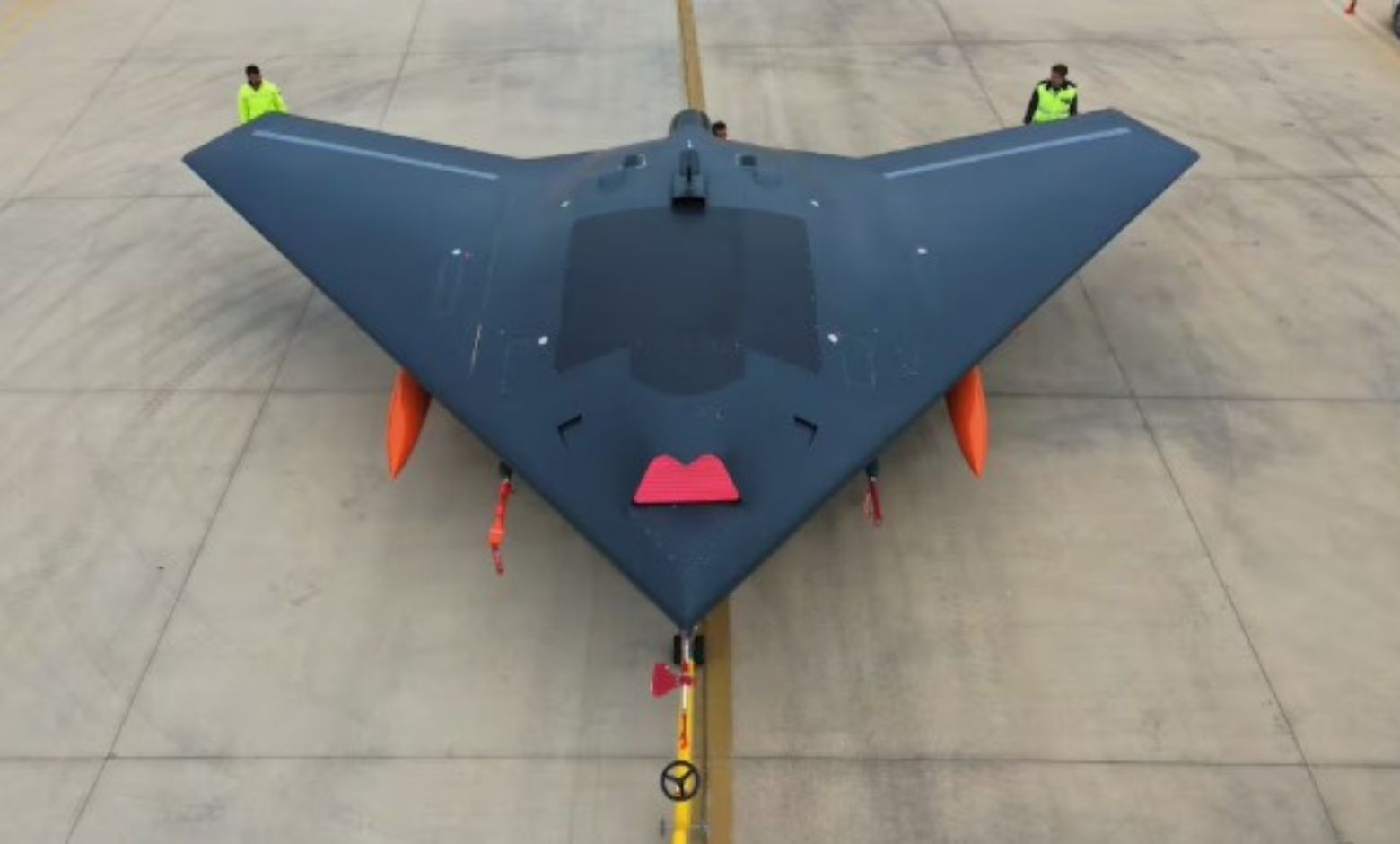
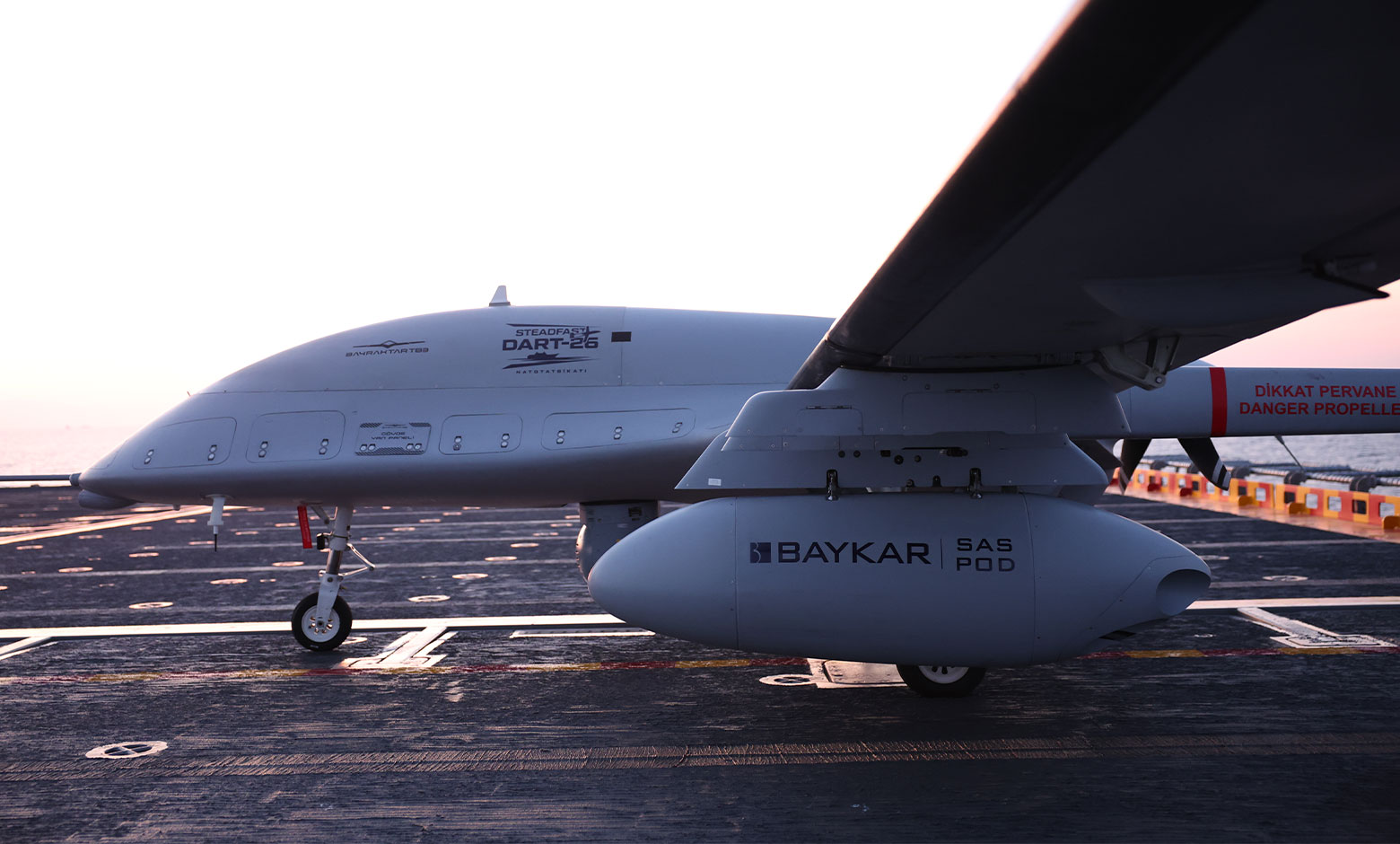
The Bayraktar TB3 Unmanned Combat Aerial Vehicle (UCAV) has marked a pivotal advancement in anti-submarine warfare (ASW) capabilities, successfully demonstrating sonobuoy deployment during the expansive Denizkurdu-I/2026 (Sea Wolf-I/2026) exercise. Operating from the deck of the Turkish amphibious assault ship TCG ANADOLU, this event signals a new era for naval surveillance and submarine detection.
Developed by Baykar, the indigenous Sonobuoy Deployment System (SAS POD) was integrated onto the TB3, enabling the UCAV to successfully release two sonobuoys during its mission. Crucially, the TB3 executed this task in synchronized operation with a manned maritime patrol aircraft (MPA), highlighting sophisticated multi-platform coordination and data sharing.
The Denizkurdu-I/2026 exercise, conducted simultaneously across the Black Sea, Marmara, Aegean, and Eastern Mediterranean from September 20-25, 2026, served as a comprehensive testbed for national defense platforms, involving units from the Navy, Army, Air Force, and Coast Guard Commands. The TB3’s performance was a standout, effectively executing ASW tasks in seamless coordination with the MPA within its operational area.
A critical component of this demonstration was the TB3’s advanced data processing capabilities. Equipped with an onboard sonobuoy processing unit, the UCAV not only analyzed acoustic data from its independently deployed sonobuoys but also integrated and processed information received from sonobuoys dropped by the collaborating MPA. This real-time underwater data visualization was successfully streamed and displayed within the exercise environment, providing immediate situational awareness.
The integration of sonobuoy deployment capability onto a UCAV like the Bayraktar TB3 represents a fundamental paradigm shift in ASW strategies. Historically, anti-submarine operations have been the purview of high-cost, limited-quantity platforms such as MPAs, frigates, and helicopters, which are associated with significant operational expenses and deployment constraints. The TB3, with its comparatively lower acquisition cost and extended endurance, offers a transformative solution. It facilitates persistent and intensive surveillance over vast maritime territories, effectively curtailing the operational freedom of adversary submarines.
This capability holds particular strategic importance for Turkey, especially in critical and often contested waterways like the Aegean Sea, Eastern Mediterranean, and Black Sea. Establishing a continuous air-acoustic surveillance network is essential to counteract the potential for covert submarine infiltration in these strategic choke points, an area that has traditionally posed considerable challenges for naval forces.
The ability to operate the TB3 from an amphibious assault ship such as TCG ANADOLU further augments its strategic value. This signifies that advanced ASW operations are no longer exclusively dependent on fixed land bases or a restricted number of specialized aircraft. Instead, these capabilities can be flexibly projected from forward-deployed naval platforms directly into operational theaters, enhancing responsiveness and reach.
It is noteworthy that the Baykar SAS POD utilized in this exercise is an independent development by Baykar, distinct from ASELSAN’s ASELBUOY POD system previously showcased on the TB3 at TEKNOFEST Mavi Vatan in August 2026. This demonstrates the platform’s inherent versatility and the parallel advancement of multiple domestic solutions for sonobuoy deployment, further solidifying Turkey’s indigenous defense industrial prowess. The TB3’s multi-role potential was also underscored by its appearance in June 2026’s Denizkurdu-2 exercise, equipped with ANTIDOT 2-U electronic warfare pods.

admin