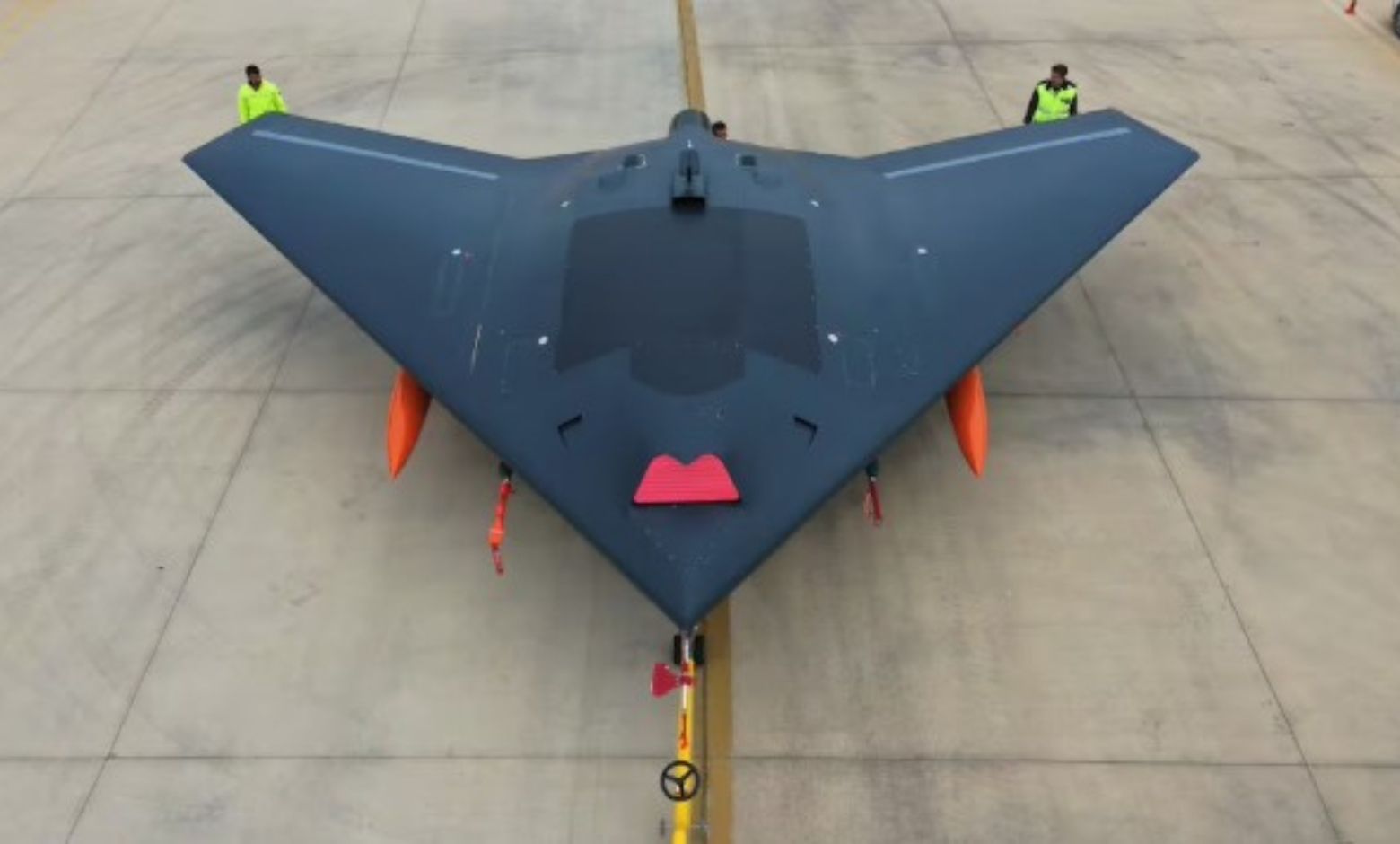
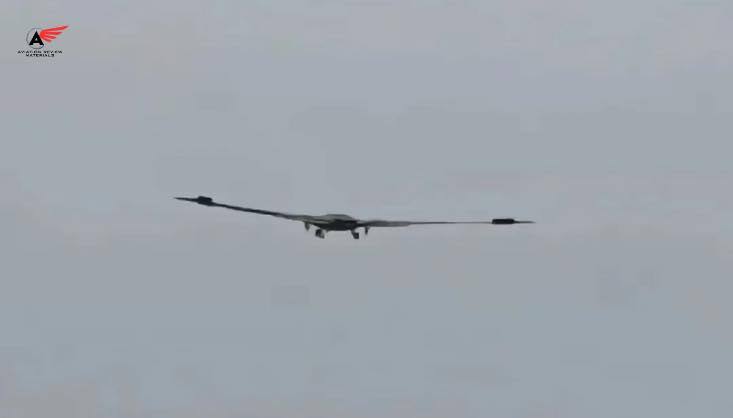
Recent intelligence originating from China offers an unprecedented view of the WZ-X, a highly secretive, very large, low-observable uncrewed aerial vehicle (UAV) with a distinctive flying-wing architecture. This advanced platform, previously glimpsed primarily through satellite reconnaissance, has long been a subject of intense speculation within global defense circles. The latest imagery critically clarifies the perplexing architecture of its enormous wings.
The existence of this high-altitude, long-endurance (HALE) drone was initially reported following its detection in May 2025 satellite imagery over the People’s Liberation Army Air Force’s (PLAAF) expansive test facility at Malan, Xinjiang. Early observations made it challenging to discern whether apparent irregularities in the wing’s planform were intrinsic design features, deceptive visual elements, or artifacts of the imaging process.
The newly surfaced photographs, corroborated by recent satellite views, definitively illustrate a distinctive wing design. The aircraft features a broad-chord inner wing section that abruptly transitions to a significantly narrower outer section. Rather than a continuous taper from the fuselage outwards, the wing’s outer portion dramatically slims down in a ‘step-down’ fashion, resulting in an exceptionally long, slender outboard wing. This configuration diverges from established stealthy flying-wing designs like the B-2 and B-21, which typically employ a more unified, continuously tapering planform. The WZ-X notably possesses two distinct outer wing sections complementing its central, diamond-shaped fuselage. While some speculation has posited this unusual geometry could facilitate wing-folding mechanisms or removable outboard sections, current evidence suggests it is an inherent design choice rather than an exotic operational feature.
From a rear perspective, the WZ-X reveals a relatively shallow central fuselage from which its extraordinarily long wings extend. The deployed landing gear indicates substantial main undercarriage doors and robust struts, consistent with an aircraft of this considerable size. Split rudders, reminiscent of those found on the B-2 bomber, are discernible near the outer wing regions. Further supporting a twin-engine assessment, the rear of the central fuselage section exhibits slot-like exhaust apertures, echoing observations from earlier imagery.
For an airframe engineered for prolonged high-altitude operations, the combination of an extensive overall wingspan and a comparatively narrow outer wing offers significant aerodynamic benefits. Such an architecture inherently increases the effective aspect ratio, thereby reducing induced drag during efficient cruise flight. This optimization is crucial for extending endurance and enhancing performance at very high altitudes. Additionally, it may allow engineers to centralize structural mass and internal volume closer to the aircraft’s core while still achieving a formidable wingspan.
However, this distinct wing geometry presents potential compromises concerning low-observable characteristics. A significant chord alteration introduces additional planform discontinuities and challenges for edge alignment, critical factors in stealth aircraft design. The precise shape, orientation, and relationship of this transition to other edges and surfaces will inevitably influence radar reflections, with radar aspect playing a crucial role. Contemporary very-low-observable design principles generally favor continuous structures and minimal discontinuities to optimize radar cross-section, a philosophy evident in the B-21’s planform. The WZ-X, as a result of this unique feature, features a semi-sawtooth trailing edge.
The sheer scale of the WZ-X is progressively clearer. Initial analyses from satellite imagery estimated its wingspan at approximately 170 feet, placing it in the same league as the B-2 bomber (172 feet). This dwarfs other known Chinese flying-wing drones. Andreas Rupprecht, a noted analyst of Chinese military aviation, postulates the WZ-X is likely a twin-engine design akin in configuration to the speculated U.S. RQ-180, though considerably larger. Rupprecht estimates a length of roughly 46 feet, highlighting a relatively capacious central fuselage and suggesting the presence of a dorsal satellite communications antenna. His unconfirmed projections include a range exceeding 12,000 miles and a typical cruising altitude between 59,000 and 66,000 feet.
The WZ-X’s configuration appears exceptionally well-suited for high-altitude endurance missions, distinguishing it from smaller Chinese flying-wing platforms like the CH-7, which possesses a deeper, more curved center section. Its broad, relatively flattened central body and expansive span are conducive to sustained flight at high altitudes. This apparent design makes long-duration surveillance missions highly plausible. The central body and inner wing sections offer ample volume for fuel, advanced sensors, and sophisticated communication systems, while the combined lifting body and outer wing promote highly efficient flight. Such a large, low-observable platform could execute diverse wide-area surveillance and network relay tasks, even operating within or proximate to contested airspace where conventional HALE UAVs face elevated risks. While a strike capability cannot be entirely discounted, particularly given China’s broader investment in combat-capable uncrewed combat aerial vehicles (UCAVs), the WZ-X’s proportions seem primarily optimized for persistence and reconnaissance.
Although the precise location of the latest imagery remains unverified, the Malan facility has evolved into a pivotal hub for Chinese drone development and testing, with satellite evidence showing significant infrastructure expansion. This site is associated with multiple flying-wing designs, including the WZ-X and the equally enigmatic, substantial GJ-X, a distinct cranked-kite planform aircraft also undergoing flight trials, estimated at a 137-foot wingspan. This underscores the vast scope of China’s experimentation with large, low-observable uncrewed aircraft. China is aggressively pursuing tailless/flying-wing concepts across a spectrum of sizes and mission profiles, complementing its larger crewed aircraft initiatives like the J-36, J-XDS, and the anticipated H-20 stealth bomber.
The WZ-X appears to be an integral component of a comprehensive strategic endeavor to develop highly integrated, low-observable aircraft, meticulously optimized for varying combinations of range, endurance, payload capacity, and survivability. For now, its official designation, specific manufacturer, propulsion system details, precise performance metrics, and ultimate mission remain undisclosed. However, its observed configuration aligns strongly with the requirements for a very large high-altitude endurance platform, even as the complex interplay between its performance capabilities and stealth attributes continues to be a subject of considerable conjecture.
Disclaimer: This content has been aggregated and reported by our automated systems.


admin