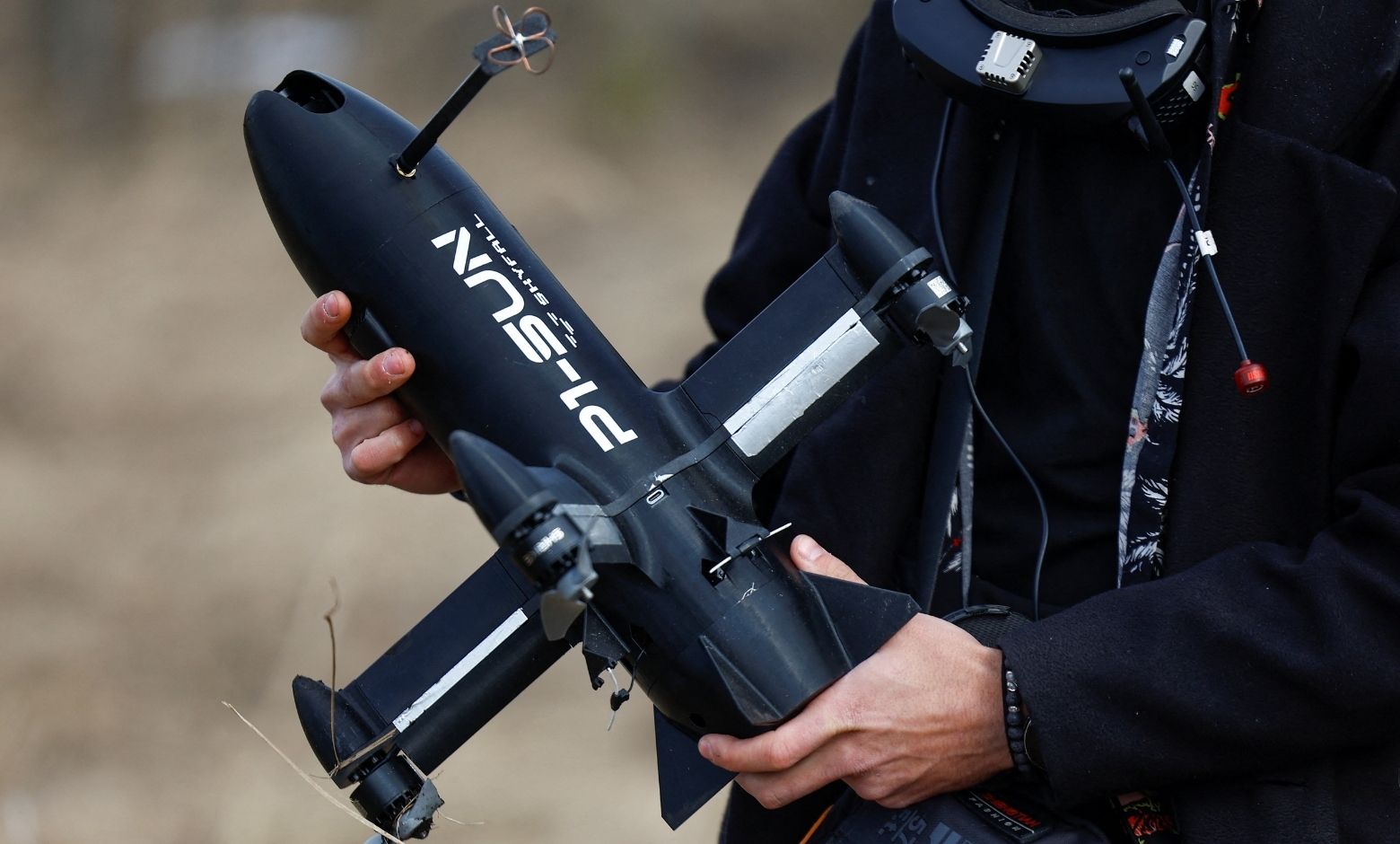
Japan has finalized a procurement agreement for P1-Sun interceptor unmanned aerial vehicles (UAVs) developed by the Ukrainian defense firm SkyFall. While the specific quantity and financial terms of the contract remain undisclosed, this marks Japan’s inaugural acquisition of an interceptor UAV system from Ukraine.
The strategic decision to procure these systems underscores Japan’s proactive efforts to bolster its air defense capabilities against evolving aerial threats. This move comes as Russia increasingly deploys jet-powered Shahed-type loitering munitions, prompting nations to seek more diverse and cost-effective counter-UAS (C-UAS) solutions compared to traditional, high-value air defense missiles.
Japanese Defense Minister Shinjiro Koizumi officially announced the signing of the agreement with SkyFall for the P1-Sun interceptor drones during a press conference held in Tokyo on October 9, 2026. Minister Koizumi emphasized the commitment to facilitating deliveries as swiftly as possible. It has not yet been specified which particular P1-Sun variant Japan will acquire.
The P1-Sun is engineered with a modular design, primarily intended for the aerial interception of Shahed-type loitering munitions and similar adversarial unmanned platforms. According to specifications released by SkyFall, the baseline P1-Sun variant boasts an operational range of approximately 23 kilometers, an endurance exceeding 17 minutes, and a maximum altitude of 5,000 meters. It can achieve a top speed of 310 kilometers per hour and carry an explosive payload of up to 800 grams. The unit cost for the standard version is stated as $1,000.
The P1-Sun family also includes advanced variants such as the P1-Sun Long, offering an extended range, and the high-speed P1-Sun JetKiller. The Long variant extends the operational reach to 33 kilometers and has a maximum altitude of 9,000 meters. The JetKiller, the fastest in the series, can attain a maximum speed of 370 kilometers per hour and reach altitudes of 9,000 meters. Equipped with a 500-gram warhead, this variant offers up to 15 minutes of flight time and has notably been employed in military trials against jet-powered unmanned aerial systems.

admin