KYIV, Ukraine — Ukrainian President Volodymyr Zelenskyy has announced that Kyiv is poised to host its inaugural international coalition meeting in France “in the coming days,” signaling a significant advancement in the nation’s multi-year endeavor to field a domestically developed ballistic missile defense (BMD) system. This initiative, dubbed “Freya,” is envisioned as a more affordable and scalable alternative to advanced systems like the Patriot, crucial for countering Russia’s persistent ballistic missile threat.
The drive for indigenous BMD capabilities gains momentum following the recent NATO summit in Ankara, where allied nations collectively pledged €70 billion ($80 billion) in military assistance to Ukraine for the current year. Concurrently, U.S. President Donald Trump committed to granting Ukraine a license to produce its own Patriot interceptors, a long-sought objective for Kyiv. Zelenskyy elaborated on Freya, stating, “This is a European model. FREYA is our Ukrainian anti-ballistic system… an analogue in terms of intercepting ballistic targets, an analogue of Patriot, but a system for more mass production and a cheaper system.”
The urgency for Freya underscores the severe impact of long-range strikes; a recent U.N. report indicated that missile and drone attacks accounted for 45% of Ukraine’s civilian casualties in May, marking the highest monthly toll since April 2022. Ballistic missiles, in particular, represent a critical vulnerability for Ukraine, which currently lacks a self-built system capable of intercepting them. Freya aims to bridge this gap, potentially reshaping Ukraine’s strategic posture on the battlefield and at future negotiation tables.
At the heart of the Freya system is the FP-7.X interceptor, developed by the Ukrainian defense firm Fire Point. This interceptor is engineered to engage ballistic targets at approximately 15 miles (24 kilometers) of altitude. Akin to the Patriot system, Freya constitutes a comprehensive defense architecture, integrating a missile and launcher with essential ancillary components such as radar units, and robust command and control (C2) infrastructure.
Zelenskyy stressed the necessity of international partnership for rapid deployment: “To create our anti-ballistic system very quickly, we need European partners who have production of those things that Ukraine does not yet have for its own anti-ballistic system.” Fire Point has proactively secured a memorandum of understanding with Germany’s Hensoldt for radar technology and is actively engaged in discussions with major European defense contractors, including France’s Thales, Italy’s Leonardo, and Norway’s Kongsberg, for the supply of tracking and command-and-control subsystems.
The Freya coalition, which Zelenskyy estimates will comprise around eight partner nations, is intended to significantly accelerate the development and production timeline. While Ukraine could ostensibly develop the system independently, the President noted that “years will pass” without external collaboration. Fire Point has set an ambitious per-shot cost target of approximately $700,000 for Freya, a substantial reduction compared to the estimated $3.8 million for a Patriot PAC-3 interceptor.
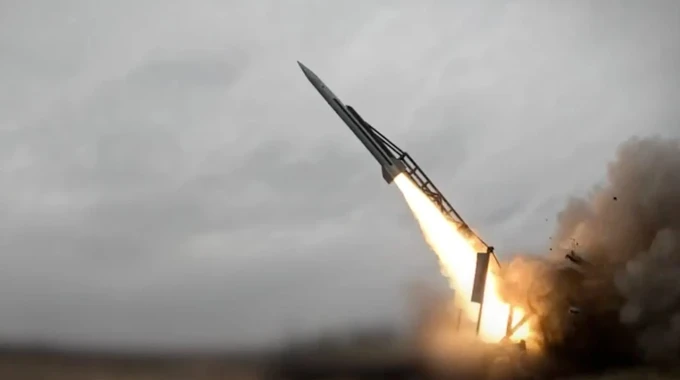
Following successful flight tests in early June, Fire Point is targeting an aggressive production schedule, aiming to mass-produce three FP-7.X interceptors daily starting in August, with the ultimate goal of achieving its first operational ballistic missile intercept by the end of 2027. The outcomes of the forthcoming meeting in France are expected to provide further updates, as the project’s progression hinges on the commitment and production capabilities of its partner nations and their respective manufacturers.
Disclaimer: This content has been aggregated and reported by our automated systems.

admin