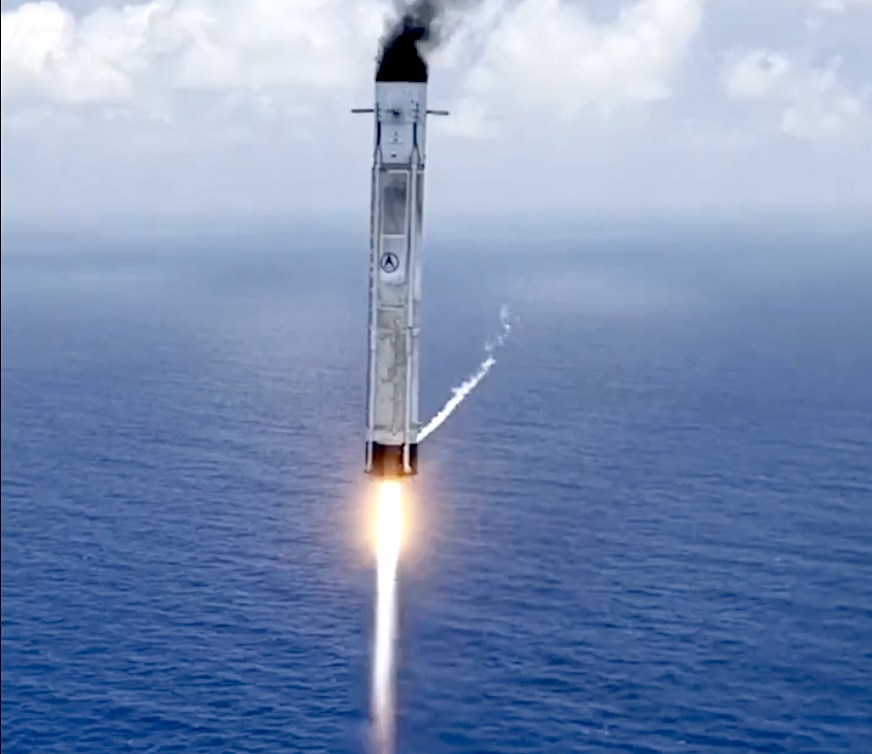
In a significant stride for its ambitious space program, China has successfully executed the controlled recovery of a launch vehicle’s first stage, becoming only the second nation globally to demonstrate this advanced capability. The breakthrough was achieved with the inaugural flight of the Long March-10B carrier rocket, whose first stage booster was precisely retrieved using an innovative net capture system at sea.
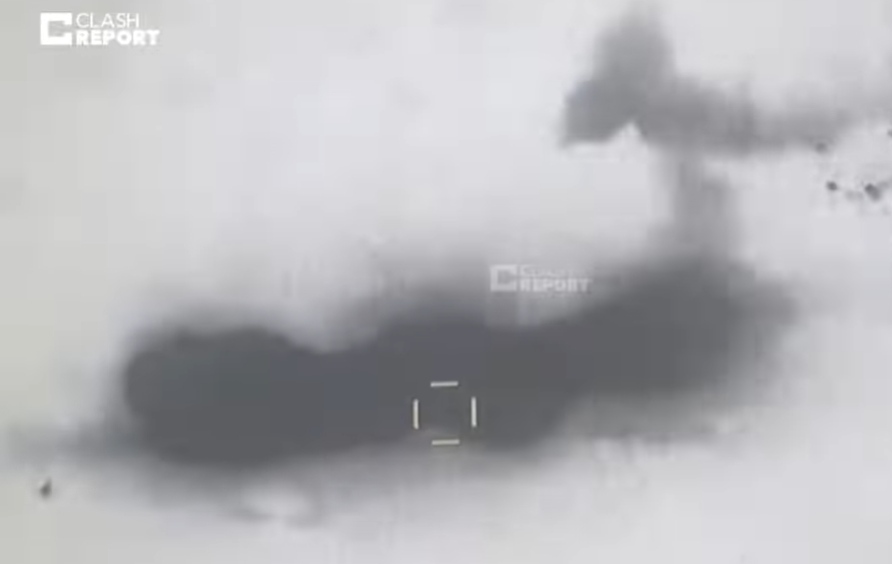
Spearheaded by the China Aerospace Science and Technology Corporation (CASC), the test saw the Long March-10B’s first stage descend approximately 11 minutes after launch. Instead of employing traditional vertical landing legs, the booster utilized four specialized capture hooks to engage with a tensioned net system onboard the Linghang Zhe (Navigator) recovery platform, successfully bringing it to a controlled halt on the ocean surface. This method offers distinct advantages over conventional vertical landings, though specifics were not detailed. Observational reports indicated the first stage emitted dense black smoke from its upper section during the controlled descent before its successful capture by the Linghang Zhe’s net system.
During this maiden flight, an undisclosed satellite was also successfully deployed into orbit, as reported by Space News. The Long March-10B is designed as a two-stage launch vehicle, measuring 5 meters in diameter and 63 meters in length, with an approximate launch mass of 760 tons. In its reusable configuration, it is engineered to deliver up to 16 tons of payload to Low Earth Orbit (LEO) at a reduced cost, catering to missions such as LEO Internet of Things (IoT) constellation deployment and large-scale commercial satellite launches.
This successful recovery operation marks a critical technology demonstration for China’s broader human spaceflight and lunar exploration initiatives. It validates the common first-stage system, which is also slated for use in the upcoming Long March-10A rocket. The Long March-10A is designated to transport the Mengzhou crewed spacecraft, replacing the current Shenzhou vehicle, to LEO. Furthermore, the three-stage Long March-10 variant is pivotal to China’s goal of achieving a human lunar landing before 2030, tasked with carrying astronauts and a lunar lander to lunar orbit.
The Long March-10B’s inaugural mission also played a crucial role in the development of the entire Long March-10 rocket family, confirming the efficacy of its common first-stage architecture and the newly developed YF-219 second-stage engine. This achievement significantly advances China’s technical preparations for its next-generation human launch systems and lunar program, setting the stage for future Long March-10A–Mengzhou orbital missions.
Disclaimer: This content has been aggregated and reported by our automated systems.


admin