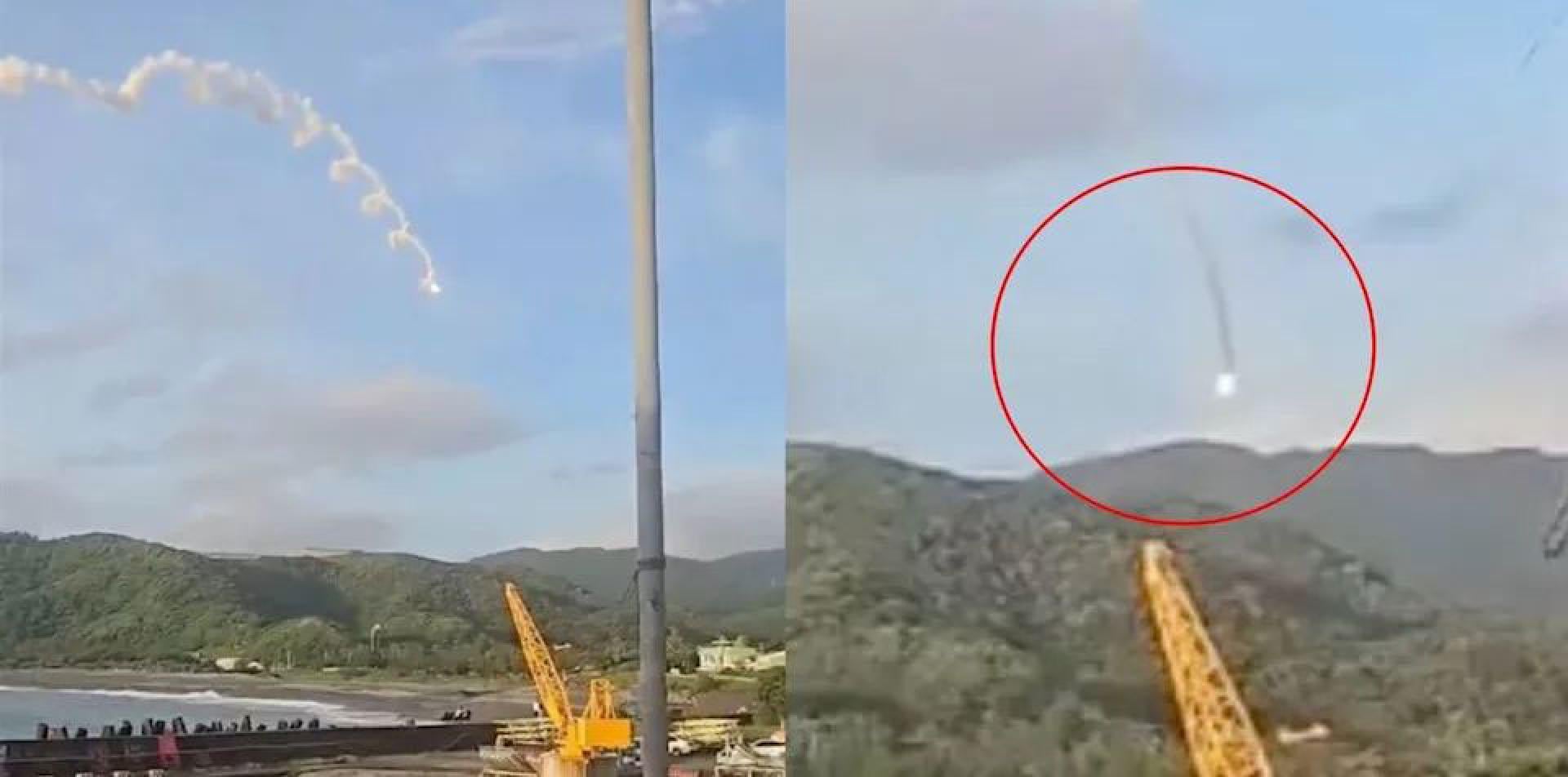
Taiwan’s ambition to develop an indigenous space launch capability faced a significant setback as its first domestically engineered satellite launch vehicle (SLV) experienced a critical anomaly during its inaugural suborbital test flight. The solid-propellant rocket, launched on August 19th from the Jiupeng missile test base operated by the National Chung-Shan Institute of Science and Technology (NCSIST), deviated sharply from its predetermined flight path shortly after liftoff. This necessitated the activation of an onboard self-destruct mechanism, leading to the vehicle’s controlled disintegration over a mountainous area.
Following the incident, local authorities promptly mandated that NCSIST suspend all further missile tests and related exercises. They also called for a comprehensive review of launch protocols and urged the institute to ensure future flight trajectories are planned to avoid residential zones and indigenous communities, even as no casualties, injuries, or property damage were reported.
NCSIST quickly clarified that the test was for an experimental satellite launch vehicle, not a missile. The institute issued a statement explaining, “An irregularity was detected during the initial phase of the flight trajectory. As a result, the pre-defined emergency plan was executed, engaging the self-destruction mechanism to ensure the impact remained within the designated safe zone.”
Sources familiar with the test, as reported by SCMP, indicated that ground-based telemetry systems detected both an erratic flight path and an uncontrolled rotational motion mere seconds after ignition. Preliminary assessments suggest potential causes include a malfunction in the gyroscope or thrust system, or issues pertaining to the weight distribution within the fully instrumented test vehicle.
Despite the immediate failure, NCSIST emphasized that the telemetry data gathered during the brief flight would be invaluable for refining the SLV’s design and optimizing system parameters. This test is still considered a pivotal step in advancing Taiwan’s space launch technologies. The multi-stage, solid-propellant launch vehicle is reportedly being developed to deploy small payloads, specifically micro-satellites weighing between 50 and 200 kg, into Low Earth Orbits (LEO) at altitudes exceeding 500 km. This effort is understood to be a continuation of the “Kirin Project,” first disclosed in 2019, which aimed to create a solid-fueled launch vehicle for similar orbital deployment objectives.
Analysts have highlighted the inherent dual-use nature of the technologies involved. While presented as a civilian space program, the core advancements in propulsion, staging, and guidance systems developed for the SLV could theoretically be adapted to enhance surface-to-surface missile capabilities. An expert, speaking anonymously, further elaborated that with significant modifications to the flight profile and payload, these technologies could potentially be integrated into medium-range ballistic missiles (MRBMs) with ranges spanning 1,500 to 2,000 km, underscoring the strategic implications of Taiwan’s burgeoning space capabilities.


admin