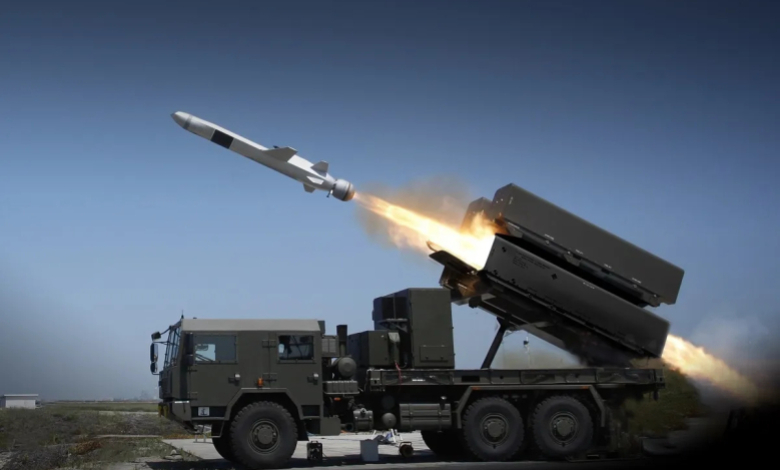
Kuala Lumpur has received a formal apology from Oslo regarding the sudden cessation of Naval Strike Missile (NSM) system deliveries, Malaysian Defence Minister Mohamed Khaled Nordin confirmed. The apology was tendered by Norwegian Defence Minister Tore Sandvik during their bilateral meeting at the Shangri-La Dialogue in Singapore, where discussions primarily revolved around the unexpected revocation of the NSM export license.
Minister Nordin articulated Malaysia’s profound disappointment with Norway’s decision, emphasizing the long-standing and robust bilateral ties between the two nations. He revealed that Malaysia had already remitted approximately 95 percent of the contract value for the NSM procurement program and is now seeking a full refund from the Norwegian government. While Sandvik committed to relaying this demand to his government, Nordin expressed skepticism about the likely success of the reimbursement claim. Concurrently, the Malaysian government has dispatched an official request letter to Kongsberg, the NSM manufacturer, awaiting Norway’s official response on the matter.
The halt in NSM system and launcher deliveries to Malaysia stems from a revised Norwegian defense export policy unveiled in May. Under this new framework, Oslo declared that its most sensitive defense technologies would henceforth be exclusively exported to NATO member states and closely allied partners. As Malaysia is neither a NATO member nor a designated partner nation, it no longer qualifies for such exports.
This policy shift has significantly impacted a critical acquisition program for the Royal Malaysian Navy, valued at approximately $145 million. The NSM systems were slated for integration onto six Maharaja Lela-class Littoral Combat Ships (LCS). Furthermore, an additional contract had been signed for NSM integration on two Lekiu-class frigates, scheduled for 2025.
During the Shangri-La Dialogue, Minister Nordin also engaged with US Secretary of the Army Pete Hegseth, soliciting Washington’s support in addressing the NSM shortfall. Malaysia is actively exploring the feasibility of acquiring a US-produced variant of the same missile, with the US administration reportedly open to considering this option.
Malaysian Prime Minister Anwar Ibrahim had previously voiced strong condemnation of Norway’s decision, asserting that Malaysia had meticulously fulfilled all contractual obligations since 2018. He accused Norway of failing to uphold its commitments, stating that the cancellation not only undermined a defense contract but also eroded trust in international agreements and strategic partnerships.
In the wake of the NSM delivery suspension, Malaysia has initiated a comprehensive evaluation of alternative anti-ship missile solutions. Among the contenders under consideration is the ATMACA Anti-Ship Missile, developed by the Turkish defense industry. A memorandum of understanding (MoU) signaling potential cooperation in this domain was recently inked between Kuala Lumpur and Ankara, highlighting Malaysia’s diversified approach to its naval ordnance acquisition strategy.
Disclaimer: This content has been aggregated and reported by our automated systems.


admin