The United States Department of State has formally approved two distinct Foreign Military Sale (FMS) programs for New Zealand, collectively valued at an estimated $1.57 billion. These critical defense acquisitions are poised to significantly bolster New Zealand’s maritime patrol, anti-submarine warfare (ASW), and broader maritime security capabilities. The Defense Security Cooperation Agency (DSCA) communicated these approvals to Congress, outlining a comprehensive package centered around MH-60R Seahawk multi-mission naval helicopters and Mk.54 lightweight torpedoes.
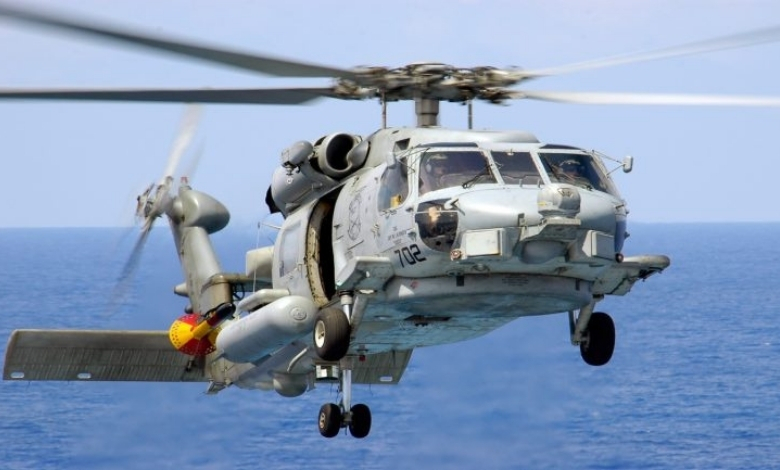
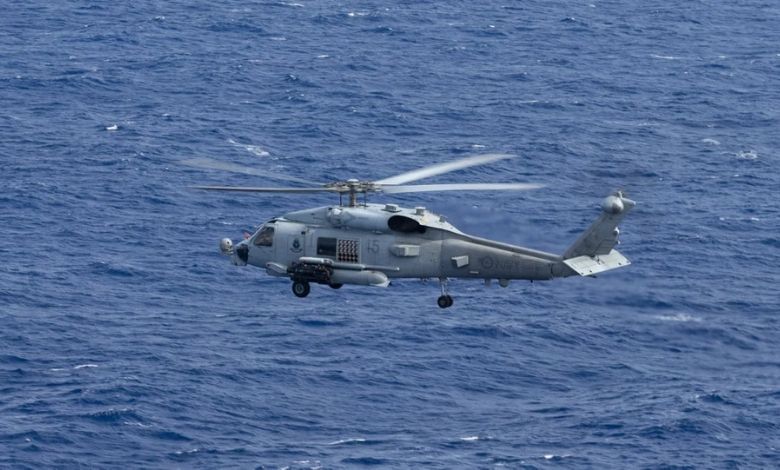
The cornerstone of this defense enhancement is the procurement of MH-60R Seahawk helicopters, a package estimated at approximately $1.5 billion. New Zealand is set to receive five (5) MH-60R Seahawk rotorcraft, alongside a robust armament suite comprising sixty-five (65) AGM-114R Hellfire II missiles, two hundred twenty-five (225) APKWS II (Advanced Precision Kill Weapon System II) guided rockets, and two hundred twenty-five (225) APKWS II guidance kits. This comprehensive deal also encompasses mission systems, essential support equipment, comprehensive training, and crucial logistical support services, ensuring full operational readiness.
Manufactured by Sikorsky, the MH-60R Seahawk is widely recognized as one of the most advanced naval helicopters globally, serving as the U.S. Navy’s primary platform for both anti-submarine warfare (ASW) and anti-surface warfare (ASuW). Its versatile mission profile extends to intelligence, surveillance, and reconnaissance (ISR), search and rescue (SAR), and a wide array of joint maritime operations. The twin-engine helicopter boasts an impressive top speed of approximately 333 km/h and can achieve up to four hours of endurance with auxiliary fuel tanks. The true strength of the MH-60R lies in its sophisticated mission systems, which include a multi-mode radar, an advanced dipping sonar, a multi-spectral targeting system, and sonobuoys. These integrated sensors enable effective target detection, tracking, and classification across both surface and sub-surface domains. Furthermore, its Link-16 data link provides critical network-centric warfare capabilities, allowing for real-time data sharing with allied naval assets and command centers.
The MH-60R offers a substantial tactical advantage in ASW operations, effectively overcoming the limitations of conventional ship-borne sonars. Its rapid deployment capability allows it to quickly reach target areas, deploy sonobuoys for broad-area search, and employ its dipping sonar for precise contact verification. This agile approach significantly accelerates the “first detection – first track – first engagement” cycle against submerged threats. The platform also possesses the direct engagement capacity to neutralize targets using lightweight torpedoes and Hellfire-class munitions.
Complementing the Seahawk acquisition is a separate FMS program for Mk.54 lightweight torpedoes, valued at $69 million. This package includes twenty (20) Mk.54 lightweight torpedoes, along with associated equipment, training, and logistics support. These torpedoes are specifically designed for ASW missions and are fully integrated to operate seamlessly with the newly acquired MH-60R Seahawk platforms.
The U.S. Department of State emphasized that these proposed sales will fortify New Zealand’s defense capacity against both current and emerging threats. The acquisition is expected to enhance the security of the nation’s critical infrastructure and significantly improve its ability to counter future warfare challenges, underscoring a strategic investment in regional stability and naval deterrence.
Disclaimer: This content has been aggregated and reported by our automated systems.

admin