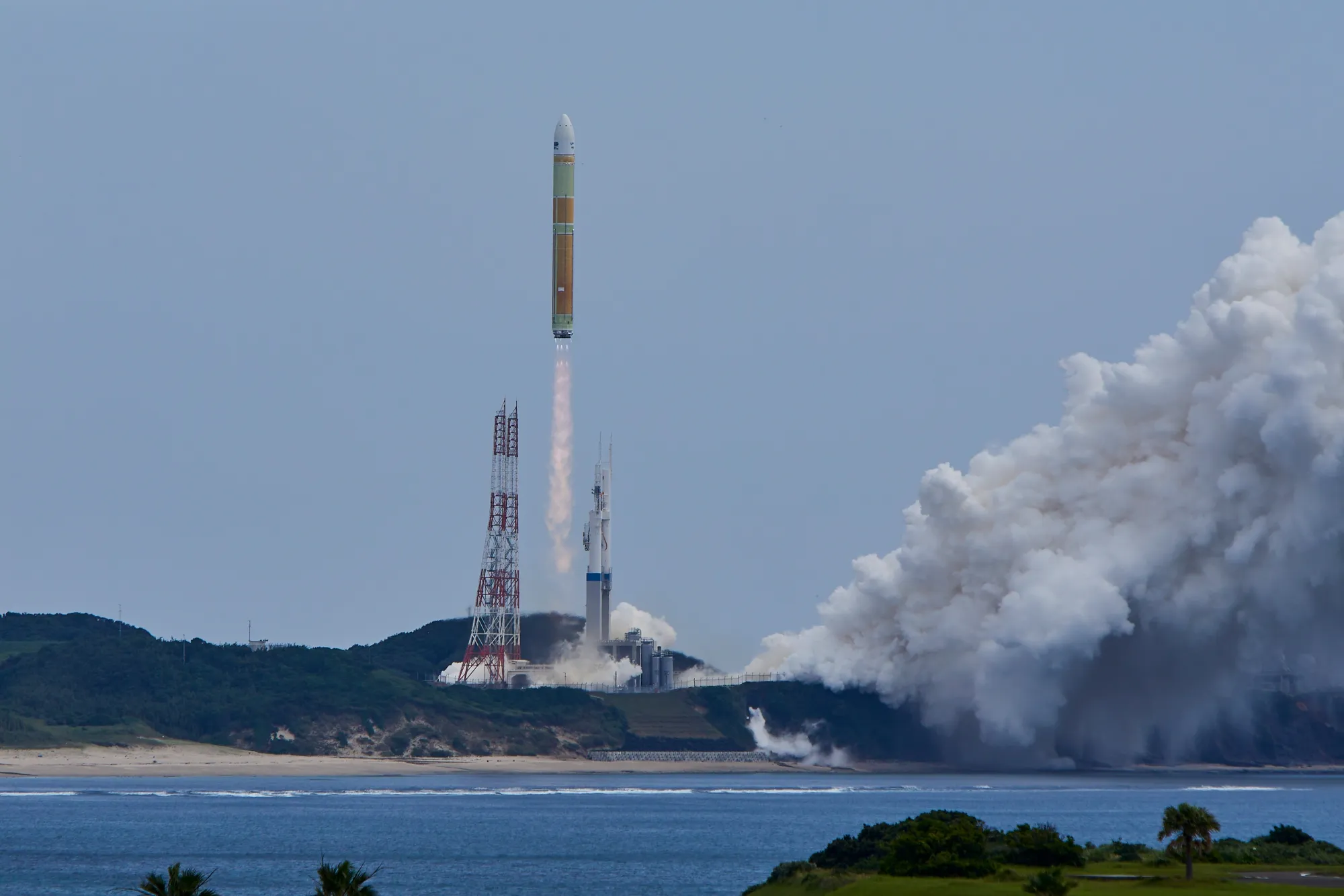
The H3-30S launch vehicle, developed by Japan, has successfully deployed six satellites into their designated orbital paths following its liftoff from Japan on June 12. This mission marked a crucial return to flight for the H3 series, serving primarily as a qualification flight to validate the operational readiness and performance of the H3-30S configuration. The vehicle incorporates extensive improvements following a critical upper-stage anomaly encountered in a prior H3 mission.
Among the payloads was BRO-22, an advanced satellite developed by France-based Unseenlabs, destined to augment the company’s specialized maritime traffic monitoring constellation. Notably, BRO-22 holds the distinction of being the inaugural satellite from a foreign private enterprise to be launched aboard an H3 series rocket.
The launch services were orchestrated by Space BD, a prominent Japanese space systems integrator. Clément Galic, CEO of Unseenlabs, underscored the strategic significance of the collaboration with Space BD and the Japan Aerospace Exploration Agency (JAXA), affirming Japan’s pivotal role as a strategic partner for both Unseenlabs and France.
Distinct from other H3 configurations, the H3-30S variant’s first stage integrates three LE-9 engines instead of the standard two, and notably, it operates without the assistance of solid rocket boosters (SRBs). The successful completion of this flight paves the way for a series of critical upcoming missions scheduled for later this year. These include the second HTV-X cargo resupply mission to the International Space Station (ISS) and the ambitious Martian Moons eXploration (MMX) mission, which aims to collect samples from Phobos, one of Mars’ moons.
BRO-22 represents the newest addition to Unseenlabs’ first-generation satellite constellation. Engineered for independent operation, a departure from previous satellites in the series, BRO-22 is designed to conduct sophisticated maritime surveillance operations by leveraging Radio Frequency (RF) detection technology. It will identify, geolocate, and characterize vessels by detecting their emitted RF signals, thereby enhancing Unseenlabs’ comprehensive ship tracking capabilities. This advanced capability is crucial for detecting vessels that typically remain invisible to conventional tracking systems, such as the Automatic Identification System (AIS). The RF data collected by Unseenlabs’ constellation provides critical intelligence for the identification and monitoring of undeclared, suspicious, or illicit maritime activities.
Looking ahead, Unseenlabs is poised to launch its inaugural second-generation satellites in the coming months, with aspirations to further advance RF signal detection capabilities and broaden its RF intelligence applications across maritime, terrestrial, and space domains.
Disclaimer: This content has been aggregated and reported by our automated systems.


admin