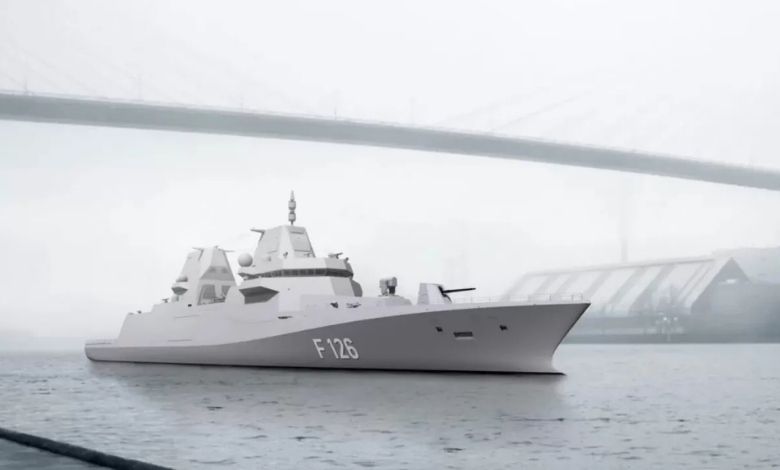
Germany is reportedly poised to abandon its ambitious F126 frigate program, one of the most significant naval procurement initiatives in its history. The decision comes after the project was plagued by substantial cost overruns, protracted delays, and persistent schedule challenges that proved insurmountable. Berlin is now said to be evaluating the acquisition of eight MEKO A200 frigates as a potential alternative to the six F126 vessels originally envisioned.
Defense Minister Boris Pistorius has reportedly communicated the assessment for terminating the F126 program to defense industry representatives and members of parliament. The F126 class was designed to serve as a cornerstone of the German Navy’s future surface combatant fleet, with plans for six frigates to be constructed. However, over several years, the program accumulated severe delays stemming from escalating costs, intricate software integration issues, and critical supply chain disruptions.
Sources indicate that approximately €2.4 billion has already been invested in the program to date. Furthermore, the delivery of the inaugural vessel was projected to be delayed by around four years, pushing its entry into service to an estimated 2032.
In an effort to salvage the project, the German government had explored restructuring the prime contractor arrangement. This involved discussions to transfer the program’s leadership from the Dutch-led Damen Naval consortium to Germany’s NVL Group (formerly Lürssen Naval Vessels), which was recently acquired by Rheinmetall. Rheinmetall CEO Armin Papperger had publicly stated his company’s expectation to sign a contract in the second quarter to assume control of the F126 program from Damen. Despite these efforts and new proposals reportedly reaching a staggering €12 billion, subsequent negotiations failed to resolve the critical timeline and budgetary crises facing the program.
With the F126 program’s cancellation on the horizon, Germany is reportedly turning its attention to procuring eight MEKO A200 frigates, developed by ThyssenKrupp Marine Systems (TKMS). The F126 design, approximately 166 meters in length and emphasized for anti-submarine warfare (ASW) and extended deployment capabilities, represented a high-tonnage platform. In contrast, the MEKO A200, at around 120 meters, is considered a smaller, lower-risk design. German authorities are reportedly seeking a solution that can be manufactured and commissioned more rapidly. Nevertheless, despite being a more compact platform, the MEKO A200 procurement is also anticipated to exceed initial cost projections.
The F126 program originally commenced in 2017 under the designation MKS 180 (Mehrzweckkampfschiff 180). Its primary objective was to develop a new generation of multi-mission warships capable of long-duration missions, intended to replace the German Navy’s aging F123 Brandenburg-class frigates. In 2020, the Damen Naval-led consortium secured the contract, initially for four ships with an option for an additional two, bringing the total to six. The F126-class vessels, with a projected displacement of around 10,000 tons, were designed to possess robust capabilities in anti-submarine warfare, anti-air warfare, anti-surface warfare, and sustained operational endurance, poised to become among the largest combatants in the German fleet. However, the relentless escalation of costs, technical integration challenges, and significant delivery timeline shifts ultimately rendered the program unsustainable.
Disclaimer: This content has been aggregated and reported by our automated systems.


admin