The United States Department of State has formally notified the U.S. Congress of its intent to sell General Electric F110-GE-129 turbofan engines to support Turkey’s indigenous National Combat Aircraft (MMU) KAAN program. This official notification marks a pivotal step in the multi-stage approval process for the critical aerospace components.
Valued at approximately $705 million, the proposed defense package was formally submitted to Capitol Hill on June 24. This action by the Trump administration officially transitions the F110 engine procurement from an informal review phase to one requiring formal congressional authorization. The sale package is understood to encompass dozens of F110-GE-129 engines, which are slated to power the initial production blocks of the KAAN fifth-generation fighter jet.
Following the formal notification, a statutory 15-day review period has commenced, during which Congress can object to the sale. To halt the transaction, both the House of Representatives and the Senate would need to pass a Joint Resolution of Disapproval. Even if such a resolution were to clear both chambers, President Donald Trump possesses veto authority. Overriding a presidential veto would necessitate a two-thirds majority vote in both the House and Senate. Despite ongoing objections from certain congressional members, the prevailing political climate suggests a low probability of the sale being successfully blocked.
Indeed, prominent Democratic voices in Congress have continued to voice their opposition. Representative Gregory Meeks, a senior Democrat on the House Foreign Affairs Committee, reiterated his concerns, citing insufficient information from the administration regarding the sale process. Representatives Chris Pappas and Dina Titus, also Democrats, reaffirmed their long-standing opposition to F-35 sales to Turkey, with Titus specifically announcing her intention to introduce a joint resolution aimed at preventing the F110 engine sale. However, Reuters reported that the Trump administration remains committed to advancing the sale, irrespective of these congressional reservations, a decision first indicated on June 24.
The timing of this official notification, preceding an imminent NATO Summit, is widely interpreted as a fresh indication of Washington’s strategic approach to bolstering defense cooperation with Ankara. Earlier remarks by President Trump, hinting at an action that would “probably make them very happy” in response to queries regarding F110 engines and F-35s, garnered significant attention.
The progression of the F110 engine sale has also reignited discussions concerning Turkey’s potential return to the F-35 Joint Strike Fighter program. Nevertheless, current U.S. congressional legislation explicitly prohibits the sale of F-35 fighter jets to Turkey as long as Ankara retains the Russian-made S-400 air defense missile systems in its inventory.
The General Electric F110-GE-129 turbofan engines are integral to the KAAN program, providing the necessary thrust for its early series production models. While the F110s will serve as an interim powerplant, Turkey’s long-term ambition for the KAAN program involves transitioning to a completely indigenous propulsion system, with the domestically developed TF35000 turbofan engine slated for integration into later production blocks.
Notably, F110 engines were also utilized in the KAAN prototypes during their initial flight tests. The newly notified package is specifically intended to supply engines for the first production-standard aircraft slated for delivery to the Turkish Air Force.
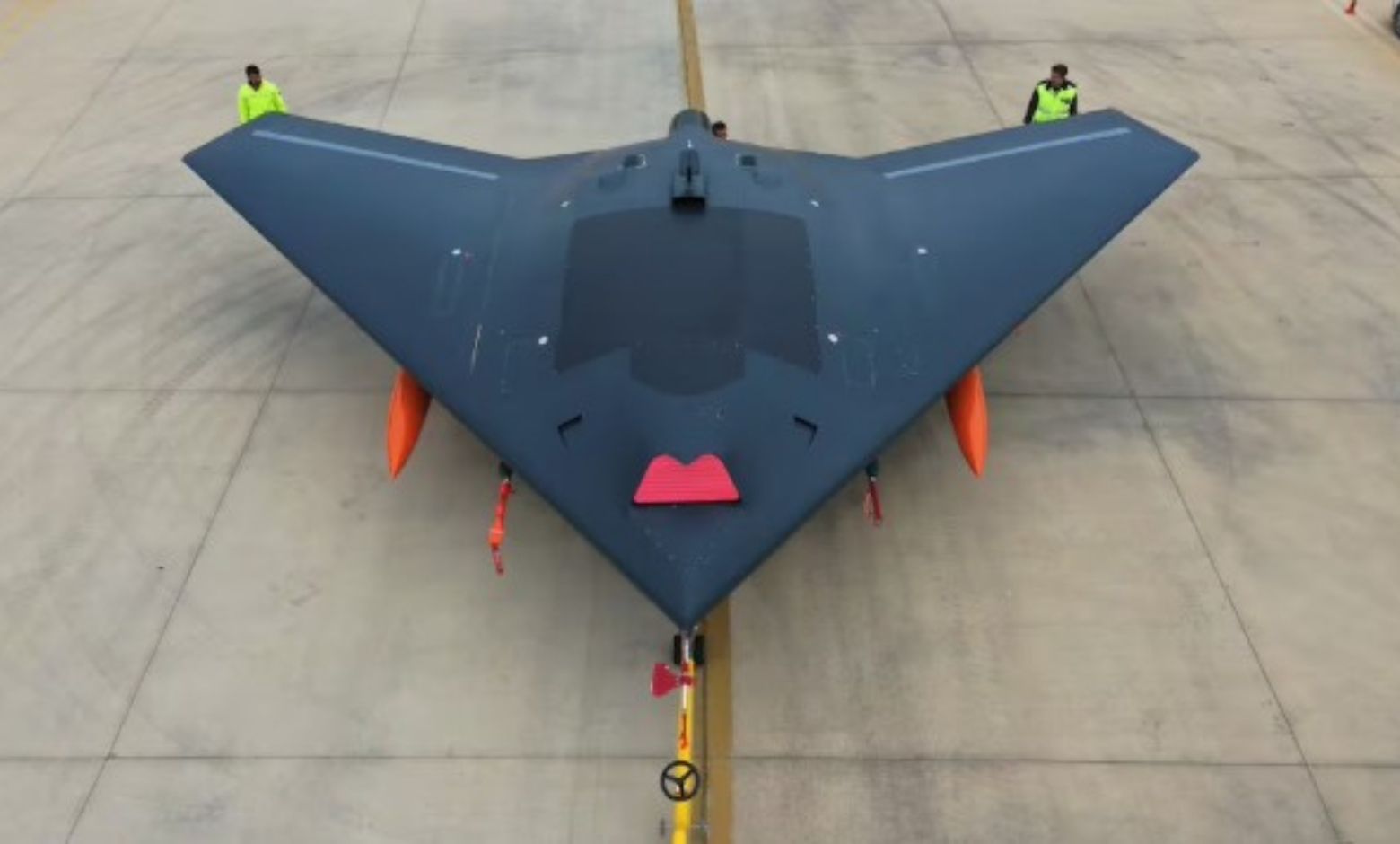
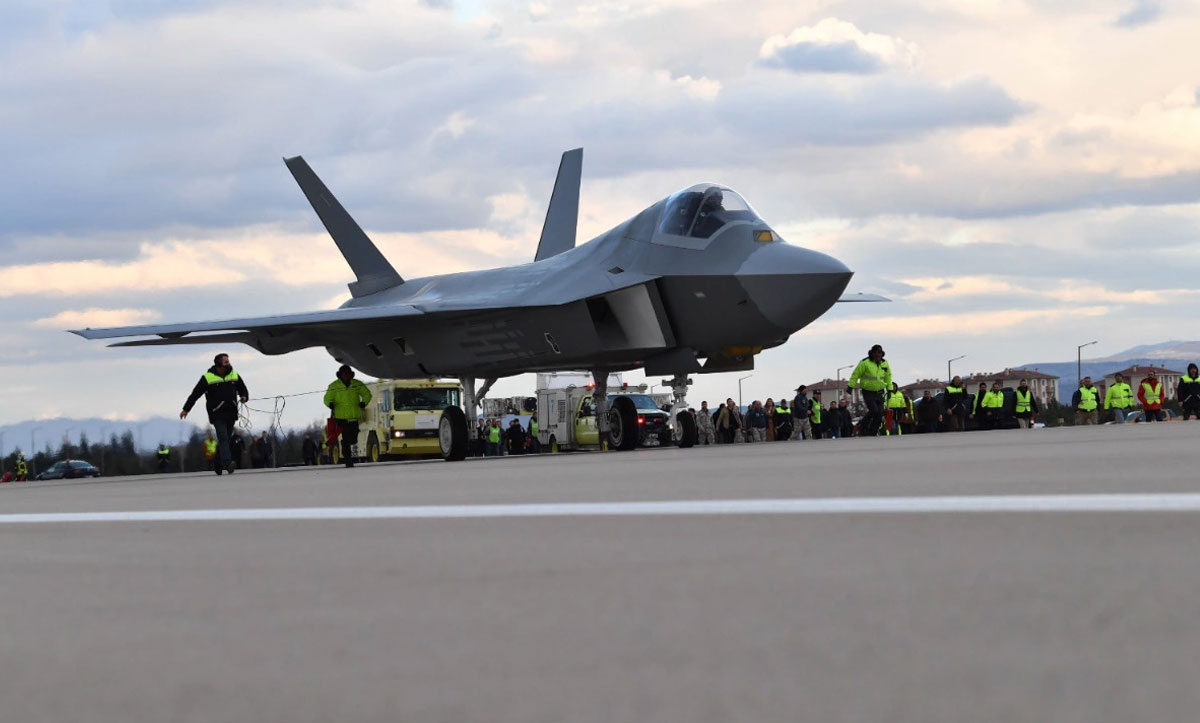
Developed by Turkish Aerospace Industries (TUSAŞ), the KAAN, a stealth-capable fifth-generation fighter, successfully performed its maiden flight on February 21, 2024, thereby initiating its comprehensive test regimen. The program envisages the development of multiple prototypes, including the P0 (first flight), P1 (flight tests), and TBST-P (full-scale static tests), for extensive flight and verification activities.
The KAAN boasts impressive specifications, including a length of 21 meters, a wingspan of 14 meters, and a service ceiling of 55,000 feet. Powered by twin F110 engines, it is designed to achieve a maximum speed of Mach 1.8. Equipped with internal weapon bays, advanced low-observability characteristics, supercruise capability, and multi-role operational flexibility, the KAAN is being engineered to serve as the Turkish Air Force’s primary combat aircraft of the future.
Disclaimer: This content has been aggregated and reported by our automated systems.


admin