Recent developments across the global defense industry highlight a spectrum of advancements, from innovative operational concepts and significant procurement agreements to strategic alliance shifts and expanded production capacities.
The U.S. Marine Corps has successfully trialed an innovative concept, utilizing its UH-1Y Venom utility helicopter as an airborne mobile command center to direct FPV (First Person View) drones. This test demonstrates a push towards enhanced battlefield situational awareness and command-and-control capabilities.
In aviation training, ITPS Canada (International Test Pilot School) has placed an order with Leonardo for six M-346T Block 20 advanced jet trainers, aiming to meet evolving tactical training requirements for test pilots. Concurrently, Russia’s United Aircraft Corporation (UAC), a Rostec subsidiary, has announced the delivery of a fresh batch of Su-35S multi-role fighter aircraft to the Russian Aerospace Forces, bolstering its combat air fleet.
Geopolitical alliances are also seeing shifts; the strategic relationship between Turkey and Azerbaijan, defined by the Shusha Declaration, is reportedly transitioning beyond emotional ties into a robust, institutionalized, and deterrent alliance model.
Advancements in unmanned systems continue, with Germany conducting a pioneering test, successfully firing a Spike LR anti-tank guided missile from its Ziesel Unmanned Ground Vehicle (UGV), a system developed by Israel’s Rafael Advanced Defense Systems. This marks a significant step in integrating precision munitions with unmanned ground platforms.
On the procurement front, Lockheed Martin, a leading U.S. defense contractor, is expanding its production capabilities for THAAD (Terminal High Altitude Area Defense) interceptor missiles through a substantial investment in new manufacturing facilities. Naval defense also sees activity, as reports indicate Greece is set to acquire the “Carlo Bergamini” and “Virginio Fasan” frigates from Italy under a contract estimated to be worth approximately 800 million euros.
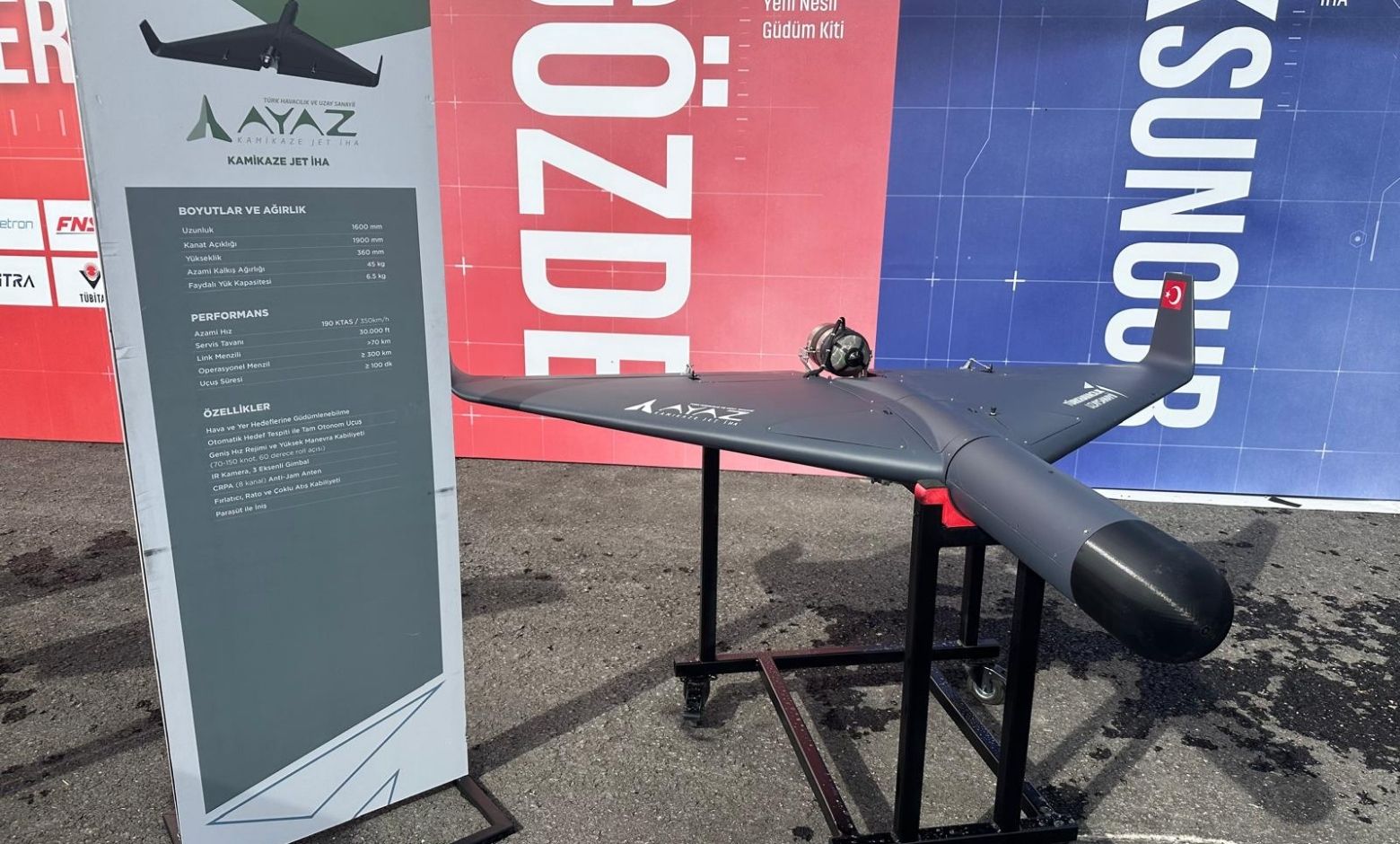
Brazil’s Embraer has formalized a Memorandum of Understanding (MoU) with HAI to strengthen strategic cooperation across the aviation and defense sectors, hinting at potential joint ventures or technology transfers. Meanwhile, Malaysia is slated to procure HAVELSAN BAHA Unmanned Aerial Vehicles (UAVs) from Turkey, intended for deployment on vessels being supplied by leading Turkish shipbuilder DESAN for the Malaysian Coast Guard.
Finally, in small arms, recent social media visuals confirm that Kazakhstan’s Special Forces personnel are now operating the SAR9 SP pistols, manufactured by Turkish small arms producer SARSILMAZ, indicating a shift in their standard sidearms.
Disclaimer: This content has been aggregated and reported by our automated systems.

admin