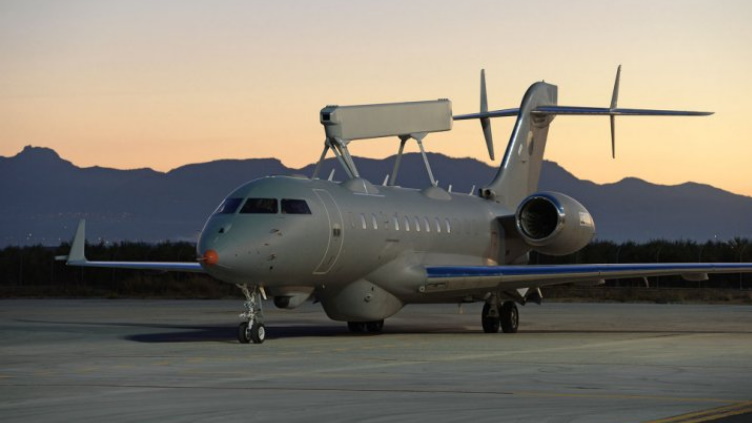
Ottawa has made a pivotal decision to acquire its next-generation airborne early warning and control (AEW&C) aircraft from Swedish defense and aerospace company Saab, opting for the GlobalEye platform. This strategic choice over offerings from U.S.-based defense contractors underscores Canada’s deliberate policy to reduce its reliance on American defense systems and diversify its military procurement channels.
Canadian government officials have emphasized the Saab GlobalEye’s instrumental role in bolstering detection and deterrence capabilities across the country’s vast and strategically vital Arctic region. Developed on the Bombardier Global 6500 business jet, the GlobalEye system integrates advanced radar and sensor suites, enabling the tracking of air, sea, and land targets at ranges up to 650 kilometers. Its robust capabilities are specifically tailored for comprehensive airspace surveillance, early warning, and long-range situational awareness, particularly critical for Canada’s challenging northern operational environment.
The GlobalEye emerged victorious from a competitive field that included the U.S.-manufactured Boeing E-7 Wedgetail and the L3Harris Aeris X. Canada’s procurement plan is understood to encompass a fleet of six early warning aircraft. This decision is tightly coupled with Canada’s broader defense policy objectives, which prioritize enhancing surveillance assets in the Arctic amid escalating military activity and evolving security risks. It also aligns with a deliberate strategy to forge stronger defense partnerships with Nordic nations such as Sweden and Finland, moving away from a predominant dependence on a single foreign supplier for critical military hardware. Past statements from Canadian leadership have consistently underscored the imperative to diversify military expenditures and avoid over-reliance on any one nation for defense acquisition.
Saab’s selection for the AEW&C program further solidifies its strategic engagement with Canada. The Swedish firm is also a prominent contender in Canada’s ongoing competition for its next fighter jet fleet, proposing its Gripen-E aircraft. Notably, Saab has previously presented offers involving technology transfer, as well as in-country production and maintenance activities for both its Gripen-E fighter and GlobalEye platforms, potentially fostering growth within Canada’s domestic defense industry. This development unfolds as Canada continues to review its planned acquisition of 88 F-35 fighter jets from Lockheed Martin, exploring various alternative options.
The strategic merits of the GlobalEye platform are also recognized by the North Atlantic Treaty Organization (NATO), which has announced its intention to replace its venerable Boeing E-3 Sentry AWACS fleet, in service for nearly four decades, with 10 to 12 Saab GlobalEye systems, further attesting to the platform’s advanced capabilities and operational suitability for alliance defense requirements.
Disclaimer: This content has been aggregated and reported by our automated systems.


admin