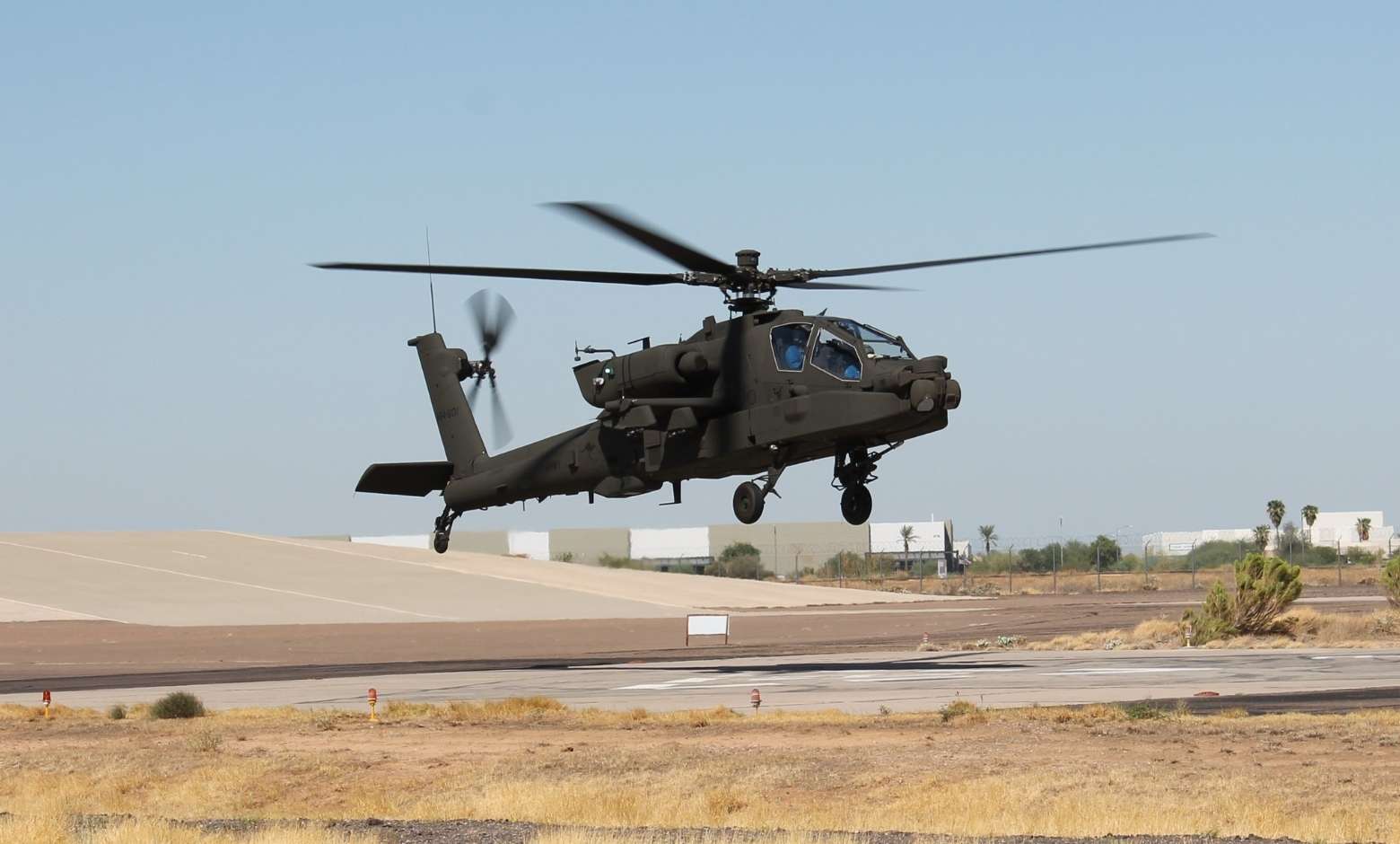
The Hellenic Army Aviation has embarked on a significant phase of its modernization program aimed at substantially augmenting the firepower of its AH-64 Apache attack helicopter fleet. Technical teams from Israel-based Elbit Systems, in close cooperation with Hellenic Army Aviation personnel, have commenced the integration of the Rafael-developed SPIKE Non-Line-Of-Sight (NLOS) missile system onto the initial Apache airframes.
This ambitious program entails retrofitting the Apache helicopters to enable them to fully carry, target, and launch the advanced Israeli-made SPIKE NLOS missiles. Upon successful completion of this integration, Greece is poised to equip its Apache fleet with a critical beyond-line-of-sight (BLOS) precision strike capability.
The SPIKE NLOS stands as a distinguished electro-optically guided, long-range missile system developed by Rafael Advanced Defense Systems. It boasts an operational range of approximately 32 kilometers when launched from land or naval platforms, with its reach extending even further when deployed from airborne assets. A notable attribute of the missile is its capacity for target engagement without requiring the operator to maintain direct visual contact. The system relays real-time imagery throughout the missile’s flight, providing the operator with the essential ability to update target coordinates or re-designate targets mid-flight.
This enhanced capability will empower the Apache helicopters to engage high-value targets, including main battle tanks, armored vehicles, air defense systems, radar installations, command centers, and maritime threats, from a safe and effective stand-off distance.
For many years, the Hellenic Army Aviation has primarily utilized AGM-114 Hellfire missiles on its AH-64A+ and AH-64DHA Longbow helicopters. However, lessons derived from recent conflicts, particularly the ongoing war in Ukraine, have highlighted the inherent risks associated with operating attack helicopters in close-range, contested forward areas.
The integration of the SPIKE NLOS is therefore set to fundamentally alter the operational concept for Greece’s Apache fleet. These helicopters will evolve beyond their traditional role of providing close air support, transforming into formidable stand-off attack platforms capable of neutralizing critical targets from extended ranges, thereby enhancing survivability and tactical flexibility.
The comprehensive modernization initiative covers a total of 19 AH-64A+ Apache helicopters. Current planning indicates that nine of these airframes will be specifically configured to deploy the SPIKE NLOS system. These vital modernization efforts are being carried out at the Hellenic Army Aviation’s Aleksandria Air Base, with a projected completion target set for late autumn 2026, a collaborative endeavor between Elbit Systems specialists and Greek technical personnel.
Post-upgrade, the modernized AH-64A+ fleet will operate in synergy with Greece’s more advanced AH-64DHA Longbow helicopters, collectively bolstering the nation’s rotary-wing attack capabilities. Concurrently with the SPIKE NLOS integration, a separate modernization program for the AH-64A+ Apaches is underway, focusing on upgrading their sensor suites, communication systems, and self-defense mechanisms, while also laying the necessary infrastructure for the NLOS missile capability.
In a related development, Turkish defense industry firm ROKETSAN recently unveiled its CIDA Long-Range Anti-Tank Missile, positioned as a peer system to the SPIKE NLOS but designed with a superior range. The CIDA is engineered to achieve an engagement range of up to 35 kilometers from ground platforms and an impressive 55 kilometers when launched from airborne platforms, crucially offering non-line-of-sight engagement capabilities across land, sea, and air platforms. With a track record of producing tens of thousands of anti-tank missiles and bombs, ROKETSAN is expected to swiftly transition the CIDA into serial production.
Disclaimer: This content has been aggregated and reported by our automated systems.


admin