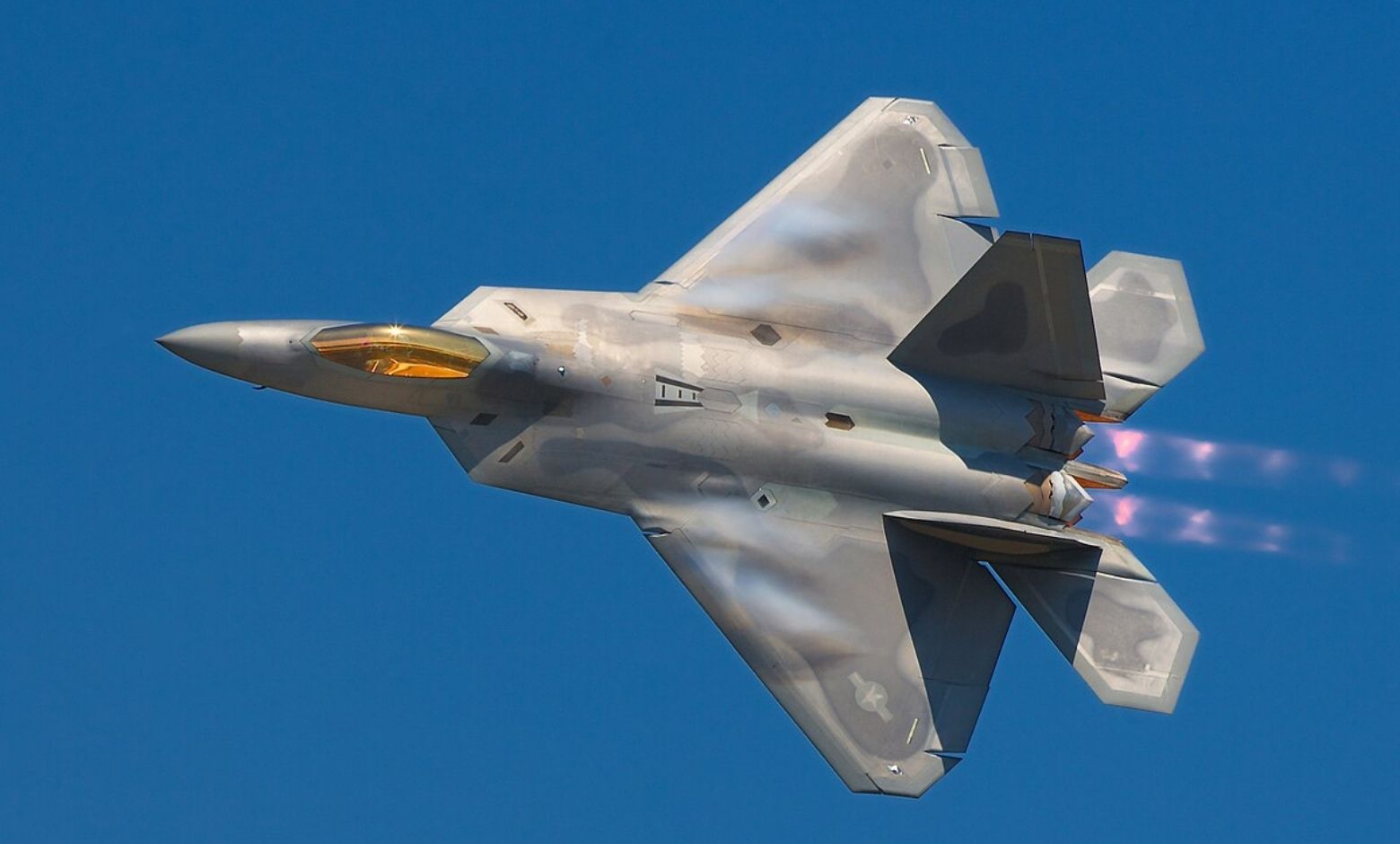
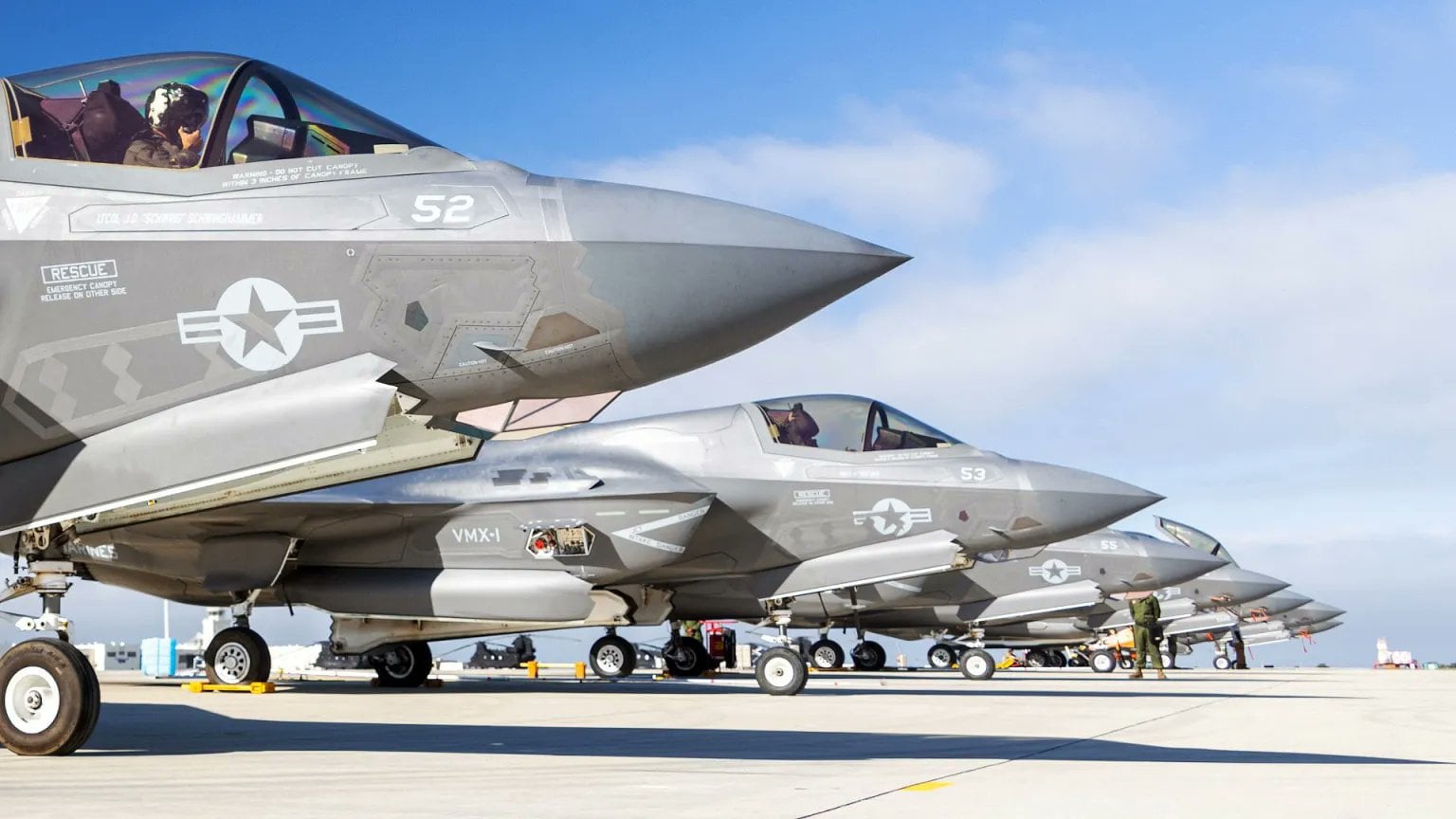
The U.S. Marine Corps has accepted six F-35B Lightning II fighter jets devoid of their advanced radar systems, a revelation confirmed by Lieutenant General Gregory Masiello, Program Executive Officer for the F-35 Joint Program Office (JPO). During a recent hearing before the Senate Armed Services Committee, Lt. Gen. Masiello disclosed that these aircraft arrived with stability ballast installed in their nose cones, rather than the expected radar arrays.
This disclosure emerged amidst a critical discussion between Lt. Gen. Masiello and Senator Mark Kelly (D-AZ), a former naval aviator, concerning the combat readiness rates of F-35 fleets across the U.S. Air Force, Marine Corps, and Navy. The primary driver behind these incomplete deliveries is attributed to the F-35 production timeline advancing ahead of the supply chain for crucial subsystems, specifically the AN/APG-85 active electronically scanned array (AESA) radar. This imbalance has further intensified existing concerns regarding the operational readiness of the F-35 fleet.
The AN/APG-85, intended to succeed the current AN/APG-81 system, presents integration challenges. As a Government-Furnished Equipment (GFE) item, the responsibility for these procurement delays and supply chain disruptions rests with the radar manufacturer, Northrop Grumman, and government acquisition management, rather than the prime contractor, Lockheed Martin.
Despite previous Pentagon statements denying any “radar-less” aircraft deliveries, reports from publications like Air & Space Forces Magazine suggest that both the U.S. Air Force and Navy are anticipated to accept similarly incomplete F-35s later this year. F-35 airframes from Production Lot 17 onwards are explicitly designed for direct integration with the AN/APG-85 radar. This delay necessitates either the storage of “empty” airframes or their delivery in an incomplete state, with radar integration to be performed only once the components become available.
Aircraft delivered without functional radar systems are severely limited in their operational utility. While suitable for basic flight training and non-combat tasks, they are incapable of participating in combat training exercises or active combat missions. The F-35 JPO defends this approach as a “planned risk,” part of a “deliberately highly concurrent development and production strategy” aimed at rapidly acquiring next-generation capabilities, acknowledging that production aircraft may precede the availability of certain software and sensor hardware.
This situation unfolds against a backdrop of declining F-35 readiness rates. A recent Government Accountability Office (GAO) report, published mid-June, indicated a continuous decrease in the F-35 fleet’s combat readiness through fiscal year 2025. The report highlighted a drop in the full mission capable (FMC) rate from 38 percent in FY2021 to 25 percent in FY2025. Similarly, the overall mission capable (MC) rate, which measures the percentage of time an aircraft can perform at least one assigned mission, fell from 67 percent in FY2021 to 44 percent in FY2025.
While Lt. Gen. Masiello did not directly contest the GAO’s findings or methodology, he posited that the JPO calculates readiness data using a different approach, resulting in a JPO-reported readiness rate of 56 percent. However, he conceded that F-35s delivered without radar systems do not meet the criteria for “full mission capable” status.
The AN/APG-85 radar is merely one of several critical components experiencing delays within the broader Block 4 modernization initiative. Integrating the enhanced capabilities of Block 4, including the new radar, demands a significant upgrade to the aircraft’s power and thermal management systems (PTMS). Lt. Gen. Masiello emphasized the future requirement for a cooling capacity ranging from 62 to 80 kilowatts (kW) to manage new equipment, more than double the current 32 kW capacity, which represents the theoretical limit of existing infrastructure. “There is no margin left in the system; this is not a strategically sustainable path,” Masiello stated, outlining a staged strategy for increasing cooling capacity through systemic and cost-effective upgrades across the program.
Although the JPO previously funded the development of a next-generation engine designed to provide higher cooling capacity, this initiative faced opposition due to prohibitive costs. Lt. Gen. Masiello clarified that significant cooling upgrades are not anticipated until after 2031, coinciding with the projected introduction of Pratt & Whitney’s Enhanced Engine Core (AETP/EIC). Even this enhanced engine, Masiello noted, would offer only a “marginal increase,” with the most substantial improvements to the power and thermal management system expected several years after engine integration, as part of the “post-Block 4” modernization roadmap.
Disclaimer: This content has been aggregated and reported by our automated systems.


admin