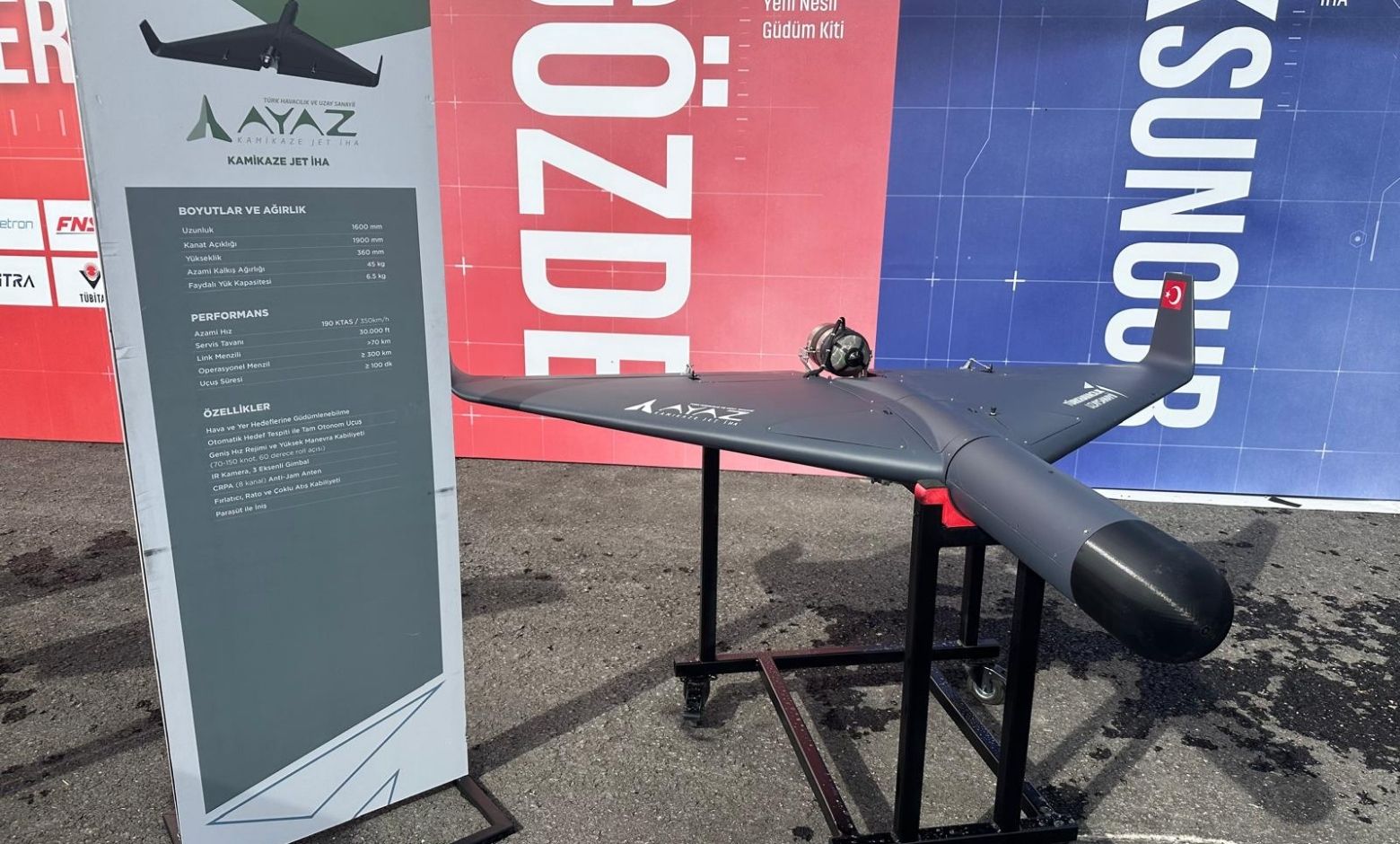
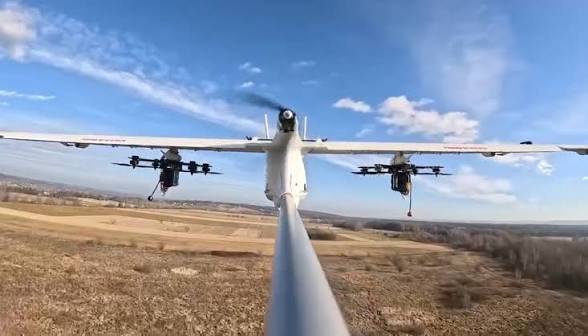
KYIV, Ukraine – Russia is increasingly employing advanced electronic warfare (EW) techniques, specifically Global Navigation Satellite System (GNSS) spoofing, to deliberately misdirect Ukrainian strike drones. This tactic has caused unmanned aerial vehicles (UAVs) to deviate from their intended flight paths and inadvertently penetrate NATO member airspace, raising significant security concerns. This strategic interference was highlighted just days before a Russian-origin drone impacted a residential building in Romania, injuring two civilians, marking what is believed to be the first direct casualty incident on NATO territory since Russia’s full-scale invasion of Ukraine in 2022.
The intensity of Russia’s EW operations has escalated significantly, a trend observed over nearly three years since disruptions were first noted around the 2023 NATO summit in Vilnius. This interference frequently spikes when Ukrainian drones are en route to Russian targets. This disruption culminated in a significant incident in Vilnius on May 20, when a UAV, believed to be a Ukrainian drone diverted by Russian electronic warfare, triggered city-wide alerts, led to the closure of the international airport, and caused the evacuation of parliament – an unprecedented event for the Lithuanian capital since 2022.
Lithuanian Defense Minister Robertas Kaunas emphasized the gravity of the situation, stating last week, “This is the new reality facing the Baltic states.” Romanian F-16 fighter jets have frequently been scrambled in response to these incursions, as confirmed by President Nicușor Dan. While the recent attack in Romania involved a drone likely launched by Russia, a vast majority of the UAVs that have entered Baltic airspace in recent months are Ukrainian, pushed off course by Russian EW. Both offensive strike drones targeting Russian refineries and ports, and defensive interceptor drones, have been repeatedly diverted into allied territory over the past few years. These incidents have already resulted in damage on allied soil, including a May 7 explosion at a Latvian oil depot. Furthermore, on May 19, a Romanian F-16 participating in a NATO patrol successfully intercepted and shot down a drone over Estonia, an incident where the downed aircraft was subsequently identified as likely Ukrainian.
Russian capabilities, centered in Kaliningrad, broadcast powerful, counterfeit satellite signals. These signals are robust enough to override a drone’s genuine navigation input during flight, feeding it false coordinates and redirecting its course. Lithuania recently identified 36 such spoofing transmitters, a dramatic escalation from the three observed at the onset of the full-scale invasion, with their operational reach now extending 450 kilometers across the region, according to Reuters. This expanding network has become “systemic, permanent,” as described by Darius Kuliešius, deputy head of Lithuania’s communications regulator.
NATO has condemned each airspace violation and dispatched interceptor jets, yet has refrained from threatening retaliatory measures. Romania’s foreign minister suggested that the Galați strike might warrant emergency consultations under NATO’s Article 4, which addresses threats to a member’s security. Following discussions with President Dan, NATO Secretary-General Mark Rutte affirmed the alliance’s readiness to defend “every inch” of allied territory. However, no member has yet invoked Article 5, the collective defense clause.
Electronic warfare specialists, such as Thomas Withington from the Royal United Services Institute, explain that spoofing functions through deception rather than brute force. Unlike jamming, which overwhelms a drone’s receiver with noise until it loses positional awareness, spoofing transmits a more potent, fabricated signal that the receiver erroneously processes as authentic. This false data causes the drone to deviate significantly from its programmed flight path. Ukraine’s long-range drone models are particularly susceptible, especially those targeting Russian oil export terminals like Ust-Luga and Primorsk near St. Petersburg, whose routes often hug the Baltic coast, a zone of concentrated Russian EW activity. Ukraine’s own investigations have corroborated that these diversions are the deliberate result of Russian EW systems, as stated by Ukrainian Foreign Minister Andrii Sybiha. Independent researchers have traced the Baltic interference to coastal sites in Kaliningrad, near known Russian EW units. Ralf Ziebold of the German Aerospace Center notes the unfortunate ease with which GNSS signals can be interfered.
Kyiv has consistently disclaimed responsibility for the stray drones, asserting it never routes attacks through allied airspace and offering apologies for incidents caused by Russian jamming. Ukrainian Foreign Ministry spokesperson Heorhii Tykhyi reiterated this stance after the Estonian shootdown, stating that “Moscow does this on purpose” and affirming that Ukraine’s legitimate targets are exclusively within Russia. Russia, conversely, denies steering the drones, instead portraying the incursions as evidence of Baltic complicity in Ukrainian attacks.
In response, Ukraine is rapidly developing countermeasures. Newer long-range drone models are being equipped with controlled-reception-pattern antennas (CRPA) to filter out spoofing signals, alongside advanced cameras and inertial navigation systems (INS) for course correction when satellite links are compromised. The “Sichen” drone, specifically designed for “conditions of active electronic warfare,” was unveiled in April. Kyiv is also exploring fiber-optic guided drones, which are impervious to traditional EW, though their high cost and limited range present deployment challenges.
Regional air defense coordination is being enhanced, with Ukraine offering expert assistance to strengthen Baltic defenses. Kyiv and Vilnius have also agreed to jointly develop drones and station Ukrainian specialists in Lithuania. While NATO’s Baltic air-policing mission operates under a combined air operations center, the ultimate decision to engage an intruding drone rests with individual national governments, which establish their own rules of engagement. Romania, for instance, amended its laws in 2024 to permit military forces to shoot down intruding drones as a last resort. For frontline NATO states, the prevailing assumption is that these drone incursions will persist, necessitating continuous adaptation.
Disclaimer: This content has been aggregated and reported by our automated systems.

admin