Sweden has officially announced its decision to procure four advanced frigates from France’s Naval Group, marking a significant strategic move to substantially enhance its naval air defense capabilities. This procurement represents the largest defense acquisition undertaken by Sweden since the early 1980s and is poised to triple the nation’s maritime air defense capacity, solidifying its naval strength in the Baltic Sea region.
The selection of Naval Group’s Frégate de Défense et d’Intervention (FDI), also known as the Belh@rra-class or set to be designated as the Luleå-class within the Royal Swedish Navy, follows a competitive bidding process. Sweden opted for the French design over proposals from the British-Swedish partnership of Babcock and Saab, as well as an offer from Spain’s Navantia.
Speaking aboard the Visby-class corvette HMS Härnösand, anchored near the Royal Palace, Swedish Prime Minister Ulf Kristersson and defense officials confirmed the government’s intent to acquire four FDI frigates. This acquisition, estimated at approximately $4 billion, addresses escalating security concerns in the Baltic Sea, particularly in light of Russia’s observed increase in ballistic missile production. “The French alternative best meets Sweden’s requirements,” stated Prime Minister Kristersson, emphasizing the swift political decision made by the government. This choice aligns with recommendations from the Swedish Navy and the Defense Materiel Administration (FMV), charting the course for the most critical surface combatant program in almost half a century for the Swedish fleet.
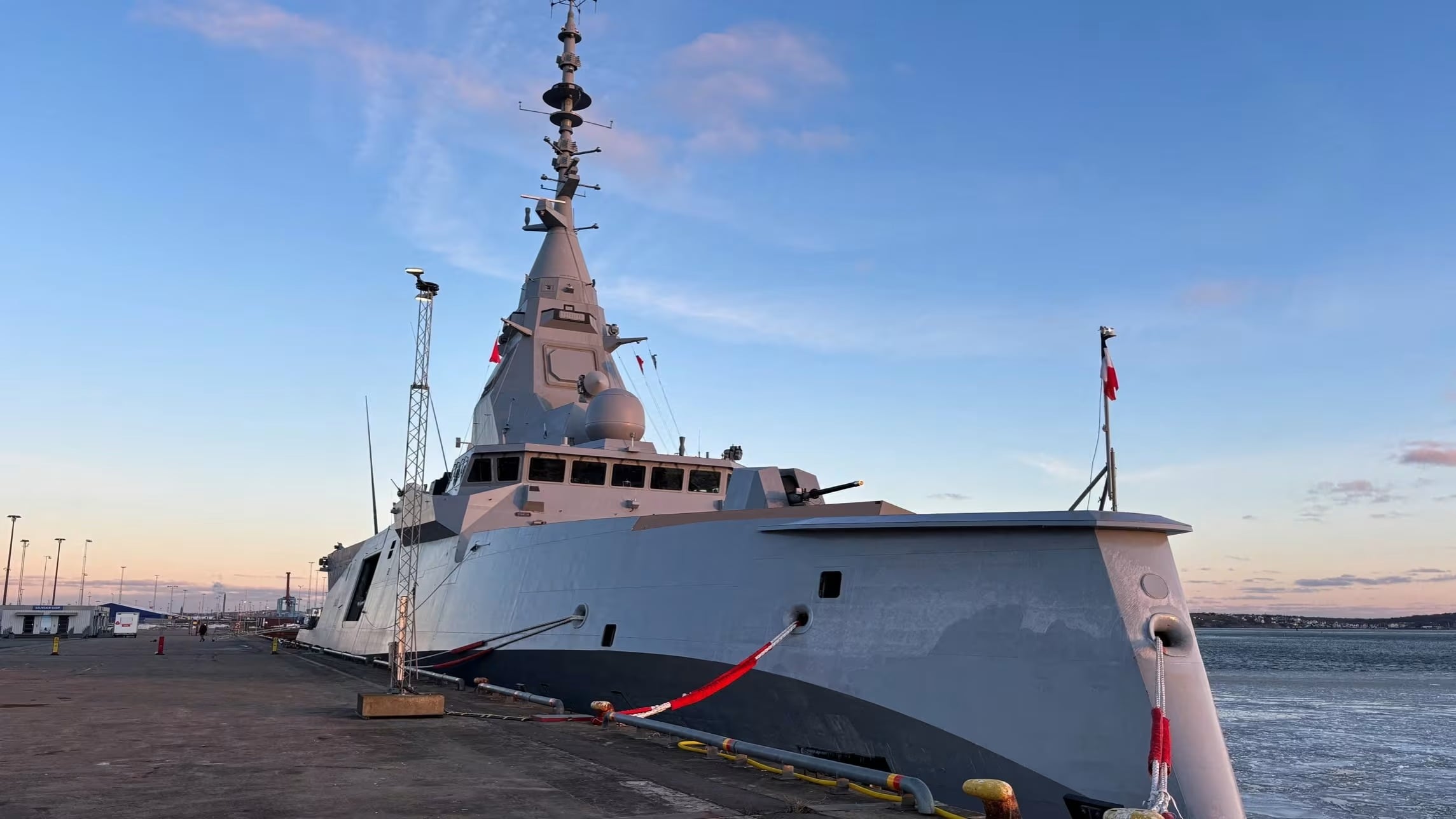
Naval Group’s FDI frigate is a multi-purpose vessel boasting a displacement of 4,600 tons and a length of 122 meters. The lead ship of the class, *Amiral Ronarc’h*, was delivered to the French Navy in October 2025 following successful sea trials that validated its digital architecture and combat systems, subsequently making an appearance in Copenhagen in January 2026.
The Swedish FDI variant is expected to feature a robust armament suite. While the standard French Navy configuration includes 16 Sylver A50 Vertical Launch System (VLS) cells for Aster 15/30 missiles, France plans to double this to 32 cells for its own vessels. Sweden’s frigates will be equipped with the MBDA Aster 30 long-range air defense system, providing ballistic missile interception capabilities, a critical enhancement highlighted by Defense Minister Pål Jonson. Additionally, the new warships will integrate the MBDA CAMM-ER (Common Anti-air Modular Missile – Extended Range) system for protection against combat aircraft, cruise missiles, and unmanned aerial vehicles.
Key reasons cited by the Swedish government for selecting the French FDI frigates include the potential for rapid delivery amidst the current security climate, high delivery reliability due to the design already being in production, and the integration of a combat-proven air defense system. Beyond the missile systems, the Swedish frigates are set to incorporate indigenous defense technologies, including Saab’s RBS 15 anti-ship missiles, Torpedo 47, GIX radars, Trackfire Remote Weapon Systems (RWS), and BAE Systems Bofors 57mm and 40mm naval guns.
The first of the four frigates is anticipated for delivery in 2030, with subsequent vessels delivered annually thereafter. While a new frigate typically costs around SEK 10 billion (approximately $1 billion), the final price will be determined by ongoing negotiations and the precise configuration of Swedish-specific equipment.


admin